General information, not legal advice. This answer was written by the PhilippineLaws team from the law it cites and checked for accuracy to the best of our knowledge, last on Sep 21, 2026. It has not been reviewed by a lawyer. Read the cited law yourself, and for your own situation talk to a lawyer or the Public Attorney’s Office (PAO).
Is a non-compete clause in my employment contract legally enforceable in the Philippines?
A non-compete clause can be enforced in the Philippines, but only if the employer shows it is reasonable: that it protects a legitimate business interest and is limited in time, place and the kind of work it bars. A restriction that is broader than the employer's interest needs, or that effectively stops you from earning a living, can be struck down as contrary to public policy. Whether yours passes depends on its wording and your job.
Illustrated Legal Brief
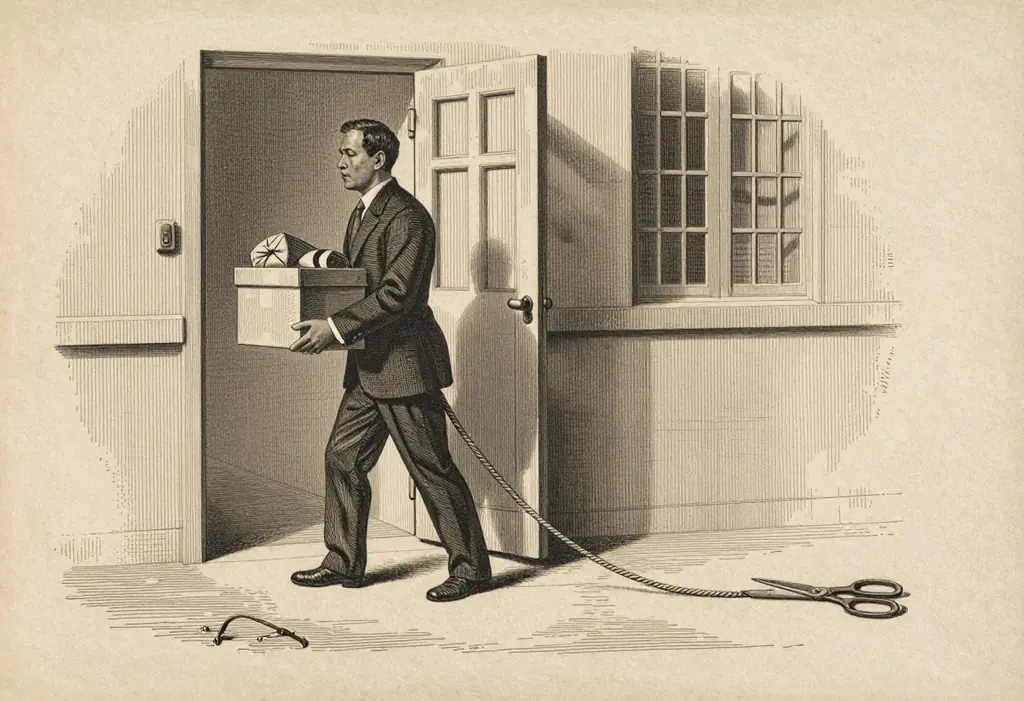 Full Plate
- Limited in time (a one-year ban has been upheld)
- Limited in territory, or confined to direct competitors
- Targeted at directly competing enterprises
- Protects demonstrable trade secrets, strategies or confidential client lists
- Imposed on senior, managerial or specialised staff with access to that information
- Long or open-ended duration with no clear justification
- No geographic limit at all, or a blanket nationwide ban
- Bans working across entire general industries or job functions
- Imposed on ordinary rank-and-file workers with no trade secrets
- Deprives an individual of the fundamental ability to earn a living
The employer has to prove the clause is reasonable. An employer's suit over a post-employment breach is usually a civil case in the regular courts, but the clause can also come up before the labor tribunals, for example when commissions are forfeited under it.
Why
Under Article 1306 of the Civil Code of the Philippines, contracting parties may establish any terms and conditions they deem convenient, provided they are not contrary to law, morals, good customs, public order, or public policy, and Article 1409 makes a contract whose object or purpose is contrary to public policy void. Post-employment non-compete covenants are scrutinised closely because they restrain a person's trade, and because Article XIII, Section 3 of the 1987 Constitution directs the State to afford full protection to labor and promote full employment.
The leading case is Rivera v. Solidbank Corp. (G.R. No. 163269, April 19, 2006). The Court held that the employer bears the burden of proving the restriction is reasonable and not greater than necessary to protect its legitimate business interests, and that reasonableness is decided on the facts of each case. It listed the factors to weigh: (1) whether the covenant protects a legitimate business interest of the employer; (2) whether it creates an undue burden on the employee; (3) whether it is injurious to the public welfare; (4) whether its time and territorial limits are reasonable; and (5) whether the restraint is reasonable from the standpoint of public policy. In that case, a retiring bank officer's one-year undertaking not to join any competitor bank or financial institution was found unreasonable on its face because it had no geographic limit, and the case was sent back for trial. By contrast, in Century Properties, Inc. v. Babiano (G.R. No. 220978, July 5, 2016), the Court upheld a clause barring a Vice President for Sales from working for direct competitors during employment and for one year afterwards, given his access to the company's confidential sales strategies.
A non-compete clause that broadly prohibits an employee from working in 'any business related to technology or sales' across the entire Philippines for several years is very unlikely to survive that analysis. Courts are reluctant to enforce restrictions that amount to a blanket prohibition against practising one's craft or profession.
Where the employer itself breached the contract first, for example by constructively dismissing the worker or failing to pay wages due, the employee has a strong argument that the employer should not be allowed to hold them to the covenant, though the outcome depends on the facts.
If a non-compete clause is valid and reasonable, an employee who violates it may be sued for damages the employer can prove, for any liquidated damages or forfeiture the contract validly provides, or for an injunction. Where the employer sues over a post-employment breach, the case has generally been brought as an ordinary civil action in the regular courts, as in Rivera, which began in the Regional Trial Court. But the clause can also come up in a labor case: in Century Properties, the labor tribunals and the Supreme Court ruled on it because the employer had used it to forfeit commissions the employee was claiming.
People also read

I am a freelancer or contractor and my client refuses to pay my invoice. What are my legal remedies?
Start with a formal written demand letter. If that fails and the amount is ₱1,000,000 or less, you can file a small claims case in the first-level court (Metropolitan, Municipal or Municipal Circuit Trial Court) without a lawyer. An agreement made through proposals, emails or chat messages can be a binding contract, and the messages can be used as evidence once properly authenticated.
Not lawyer-reviewedRead the answer
Someone borrowed money from me and won't pay it back. Can I file estafa and have them jailed?
Usually not. Failing to pay a loan is a civil matter, because the Constitution says no one may be imprisoned for debt; estafa applies only when there was deceit at the start, such as a fake identity or invented property used to get the money, or when money handed over in trust for a specific purpose was misappropriated. For an ordinary unpaid utang, the remedy is a written demand, barangay conciliation, and a collection case such as small claims.
Not lawyer-reviewedRead the answer
Can I cut down tree branches or roots from a neighbor's tree that cross into my property?
Under Article 680 of the Civil Code, you can cut tree roots that penetrate into your land yourself; however, you cannot cut overhanging branches on your own. You must formally demand that your neighbor cut the overhanging branches, and if they refuse, you can compel them through the barangay or court.
Not lawyer-reviewedRead the answer
Can an illegitimate child use the father's surname, and what are their inheritance rights?
Under Republic Act No. 9255, an illegitimate child may use the father's surname only if the father has expressly acknowledged paternity in the birth certificate, a public notarized document, or a private handwritten instrument. In inheritance, an illegitimate child whose filiation is established is a compulsory heir entitled to a legitime equal to one-half (50%) of the legitime of a legitimate child.
Not lawyer-reviewedRead the answer