General information, not legal advice. This answer was written by the PhilippineLaws team from the law it cites and checked for accuracy to the best of our knowledge, last on Sep 21, 2026. It has not been reviewed by a lawyer. Read the cited law yourself, and for your own situation talk to a lawyer or the Public Attorney’s Office (PAO).
Can an illegitimate child use the father's surname, and what are their inheritance rights?
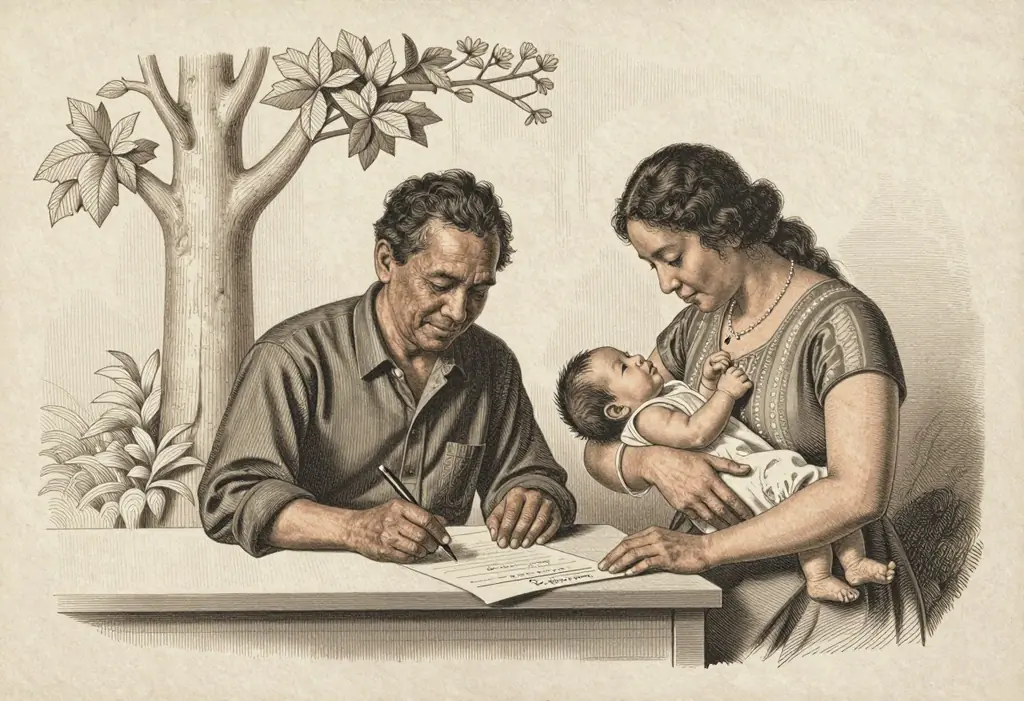
Under Republic Act No. 9255, an illegitimate child may use the father's surname only if the father has expressly acknowledged paternity in the birth certificate, a public notarized document, or a private handwritten instrument. In inheritance, an illegitimate child whose filiation is established is a compulsory heir entitled to a legitime equal to one-half (50%) of the legitime of a legitimate child.
Illustrated Legal Brief
 Full Plate
- Mother's surname by statutory default
- Father's surname allowed with express written acknowledgment
- Parental authority and custody belong to the mother
- Father must give support and may be granted visitation rights
- Compulsory heir of the parent once filiation is established
- Legitime is 1/2 (50%) of a legitimate child's legitime
- Cannot be disinherited except for strict legal cause in a will
- Iron Curtain Rule bars intestate inheritance from the parent's legitimate collateral relatives
Bearing the father's surname does not transfer custody or joint parental authority to the father.
Why
Article 176 of the Family Code of the Philippines originally mandated that all illegitimate children must use the surname of their mother. Republic Act No. 9255 amended this provision so that illegitimate children may use the father's surname if the father has expressly recognized his filiation. The father keeps the right to sue in court during his lifetime to prove non-filiation.
Under RA 9255, the recognition must appear in one of three forms: (1) the record of birth in the civil register, such as the father's acknowledgment in the Certificate of Live Birth; (2) an admission in a public document, such as a notarized Affidavit of Admission of Paternity (AAP); or (3) an admission in a private handwritten instrument made by the father. Without this express acknowledgment, the child must continue bearing the mother's surname.
Even when an illegitimate child bears the father's surname, sole parental authority and legal custody remain exclusively with the mother under Article 176. The Supreme Court has applied this rule in cases such as Briones v. Miguel (G.R. No. 156343, October 18, 2004) and Masbate v. Relucio (G.R. No. 235498, July 30, 2018): the father remains obliged to give support and may be granted visitation rights according to the child's best interests, but the mother will not be deprived of custody absent compelling reasons, such as proof of her unfitness.
Under Article 887 of the Civil Code, an illegitimate child is a compulsory heir of the parent whose filiation is established. Under Article 176 of the Family Code, the legitime (the portion of an estate reserved by law that cannot be given away) of each illegitimate child is one-half (50%) of the legitime of a legitimate child. Under Article 895 of the Civil Code, illegitimate children's legitimes are taken from the free portion of the estate and cannot exceed it, so where there are many heirs the actual amount can be smaller.
Under Article 992 of the Civil Code, known as the 'Iron Curtain Rule', an illegitimate child cannot inherit by intestate succession from the legitimate children and relatives of their father or mother, nor can those legitimate relatives inherit from the illegitimate child in the same manner. In Aquino v. Aquino (G.R. No. 208912, December 7, 2021), however, the Supreme Court held that this bar applies only between collateral relatives, such as half-siblings, aunts, and uncles, and that a child whose parents did not marry may inherit from a grandparent by right of representation.
People also read
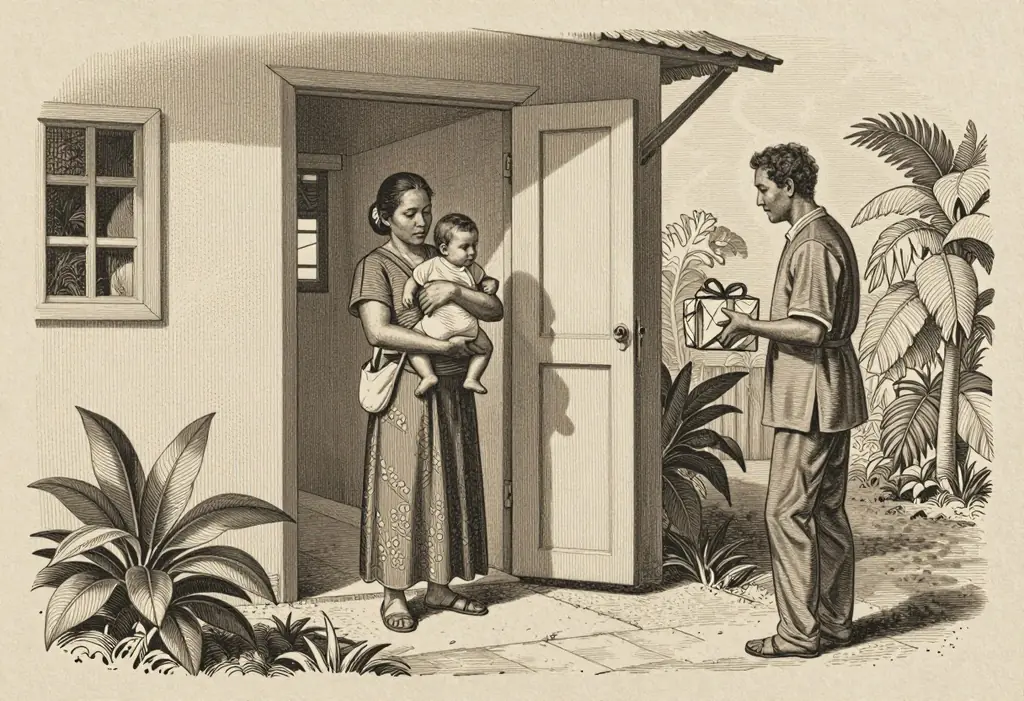
Does the biological father have custody rights over a child born out of wedlock?
No. Under Article 176 of the Family Code (as amended by Republic Act No. 9255) and established Supreme Court doctrine (Masbate v. Relucio), sole parental authority and legal custody over an illegitimate child belong exclusively to the mother. A father who recognizes the child has visitorial rights and child support obligations, but cannot claim custody unless the mother is proven completely unfit in court.
Not lawyer-reviewedRead the answer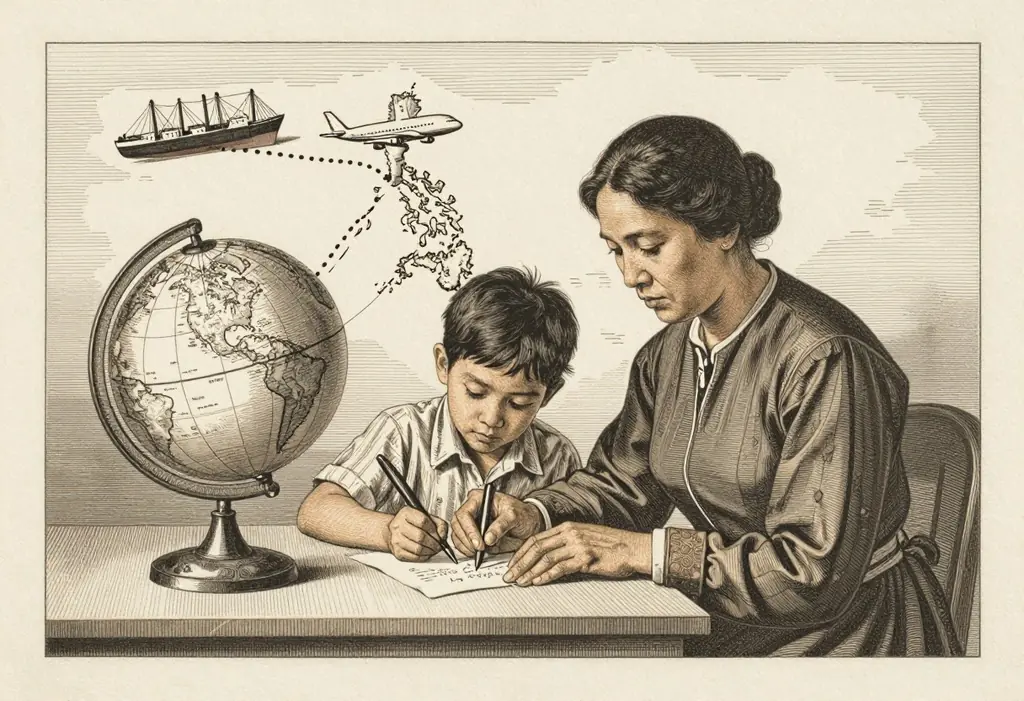
How can a mother claim child support if the father is an OFW or a foreign citizen?
A mother can legally enforce child support against an OFW or foreign father through Philippine courts. For land-based OFWs and seafarers, courts can direct the manning agency or employer to garnish wages under mandatory POEA/DMW allotments; for foreign fathers, the Supreme Court ruled in Del Socorro v. Van Wilsem that foreign nationals residing in or visiting the Philippines cannot evade criminal liability under RA 9262 for withholding child support.
Not lawyer-reviewedRead the answer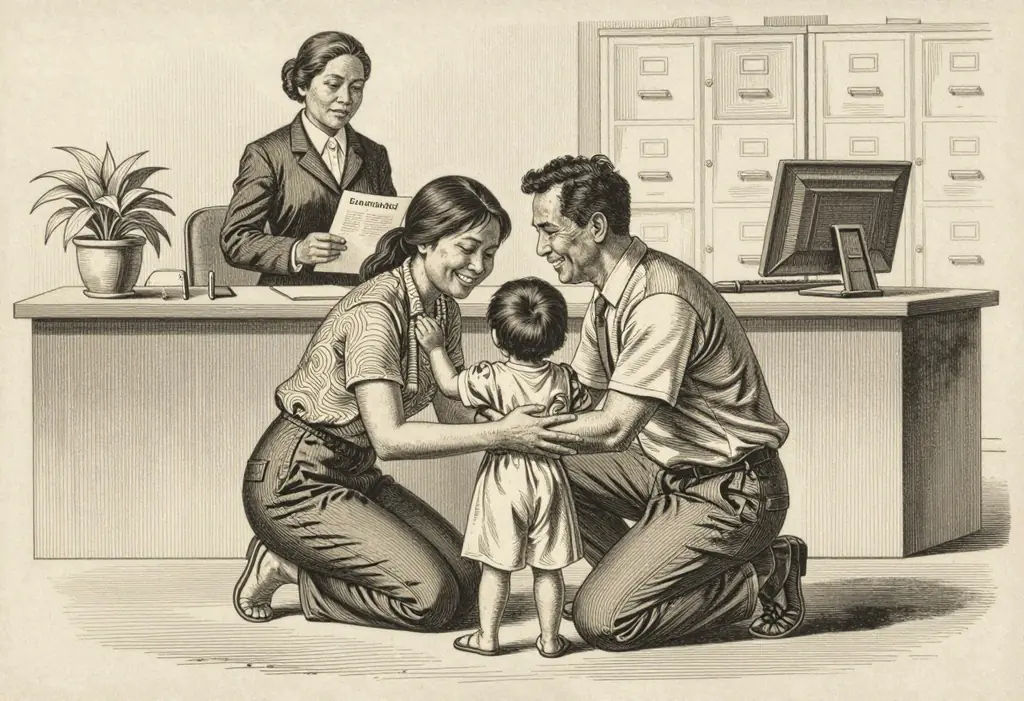
How does domestic adoption work in the Philippines under RA 11642, and is court filing still required?
No, court filing is no longer required for domestic adoption. Under Republic Act No. 11642 (Domestic Administrative Adoption and Child Care Act), domestic adoption in the Philippines was completely transformed into a purely administrative process governed by the National Authority for Child Care (NACC), eliminating expensive court trials, lawyer litigation, and newspaper publication fees.
Not lawyer-reviewedRead the answer
Can a father be compelled to pay child support in the Philippines, and can he refuse if he is unemployed or the child is illegitimate?
Yes. Both parents are legally obliged under the Family Code to support their child—whether the child is legitimate or illegitimate, once filiation is established—covering sustenance, housing, clothing, healthcare, education, and transportation, in proportion to the parent's means. A father who deliberately deprives the child of support legally due can also be prosecuted for economic abuse under RA 9262, which carries imprisonment.
Not lawyer-reviewedRead the answer