General information, not legal advice. This answer was written by the PhilippineLaws team from the law it cites and checked for accuracy to the best of our knowledge, last on Sep 21, 2026. It has not been reviewed by a lawyer. Read the cited law yourself, and for your own situation talk to a lawyer or the Public Attorney’s Office (PAO).
How does domestic adoption work in the Philippines under RA 11642, and is court filing still required?
No, court filing is no longer required for domestic adoption. Under Republic Act No. 11642 (Domestic Administrative Adoption and Child Care Act), domestic adoption in the Philippines was completely transformed into a purely administrative process governed by the National Authority for Child Care (NACC), eliminating expensive court trials, lawyer litigation, and newspaper publication fees.
Illustrated Legal Brief
 Full Plate
- Mandatory court filing in Regional Trial Court (Family Court)
- Required mandatory newspaper publication (costing ₱30k–₱80k)
- Lengthy courtroom proceedings lasting 2 to 5 years
- Required hiring private trial attorneys for court appearances
- Subject to judicial backlogs and adversarial procedures
- Filed directly with Regional Alternative Child Care Offices (RACCO)
- Zero newspaper publication requirement for domestic adoptions
- Streamlined process targeted to conclude in 6 to 9 months
- No litigation lawyer needed to appear in court hearings
- Simplified expedited track for step-parents and close relatives
Under RA 11642, an Order of Adoption issued by the NACC has the full legal effect and authority of a court decree.
Why
Prior to 2022, domestic adoption under Republic Act No. 8552 required filing a formal civil case before a Regional Trial Court. Families endured years of judicial backlogs, mandatory newspaper publication fees costing tens of thousands of pesos, and complex adversarial hearings. Republic Act No. 11642 enacted a total paradigm shift by moving domestic adoption entirely out of the courts and into an administrative system.
Under RA 11642, the newly created National Authority for Child Care (NACC)—a specialized agency attached to the DSWD—exercises quasi-judicial jurisdiction over all domestic administrative adoptions. Prospective adoptive parents file their petition directly with the Regional Alternative Child Care Office (RACCO) in the region where they reside. The NACC reviews the social case study reports, confirms legal clearance, and issues the Order of Adoption, which carries the exact same binding legal force as a court decree.
The law establishes simplified, expedited tracks for step-parent and relative adoptions. A spouse who wishes to adopt the legitimate or illegitimate child of their husband or wife, or relatives within the fourth degree of consanguinity or affinity (such as siblings, grandparents, nieces, nephews, or first cousins), enjoys an accelerated procedure where the mandatory supervised trial custody period is generally waived.
Section 56 of RA 11642 and Republic Act No. 11222 (the Simulated Birth Rectification Act) also provide an administrative mechanism for parents who previously simulated a birth certificate by registering a child as their own biological child. As long as the simulation was done for the best interest of the child and the child has been living with the parents for at least three continuous years, the parents can rectify the civil status administratively without incurring criminal prosecution for simulation of birth.
Once the NACC issues the Order of Adoption and Certificate of Finality, the child is registered with the Philippine Statistics Authority (PSA). For all legal intents and purposes, the adopted child ceases to be an illegitimate or adoptive child and acquires the status of a legitimate child of the adopters, entitled to use the adopters' surname, receive full parental authority and support, and inherit as a compulsory heir on equal footing with biological legitimate children under the Civil Code.
People also read

Can an illegitimate child use the father's surname, and what are their inheritance rights?
Under Republic Act No. 9255, an illegitimate child may use the father's surname only if the father has expressly acknowledged paternity in the birth certificate, a public notarized document, or a private handwritten instrument. In inheritance, an illegitimate child whose filiation is established is a compulsory heir entitled to a legitime equal to one-half (50%) of the legitime of a legitimate child.
Not lawyer-reviewedRead the answer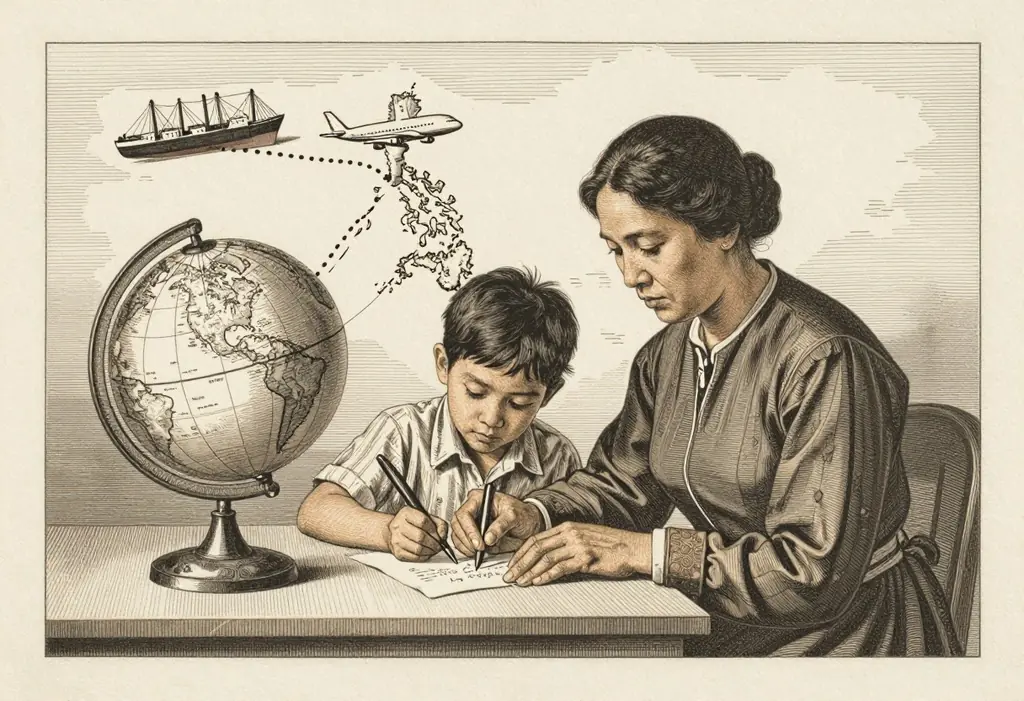
How can a mother claim child support if the father is an OFW or a foreign citizen?
A mother can legally enforce child support against an OFW or foreign father through Philippine courts. For land-based OFWs and seafarers, courts can direct the manning agency or employer to garnish wages under mandatory POEA/DMW allotments; for foreign fathers, the Supreme Court ruled in Del Socorro v. Van Wilsem that foreign nationals residing in or visiting the Philippines cannot evade criminal liability under RA 9262 for withholding child support.
Not lawyer-reviewedRead the answer
How can a mother get an immediate protection order (BPO, TPO, PPO) against an abusive partner under RA 9262?
A mother facing domestic abuse can obtain an immediate Barangay Protection Order (BPO) valid for 15 days from the Punong Barangay to prohibit violence and harassment. To secure temporary child custody, court-ordered child support, and exclusion of the abuser from the home, she must file for a Temporary Protection Order (TPO) in Family Court, which judges must act upon ex parte within 24 hours.
Not lawyer-reviewedRead the answer
Can a father be compelled to pay child support in the Philippines, and can he refuse if he is unemployed or the child is illegitimate?
Yes. Both parents are legally obliged under the Family Code to support their child—whether the child is legitimate or illegitimate, once filiation is established—covering sustenance, housing, clothing, healthcare, education, and transportation, in proportion to the parent's means. A father who deliberately deprives the child of support legally due can also be prosecuted for economic abuse under RA 9262, which carries imprisonment.
Not lawyer-reviewedRead the answer