General information, not legal advice. This answer was written by the PhilippineLaws team from the law it cites and checked for accuracy to the best of our knowledge, last on Sep 21, 2026. It has not been reviewed by a lawyer. Read the cited law yourself, and for your own situation talk to a lawyer or the Public Attorney’s Office (PAO).
How can a mother get an immediate protection order (BPO, TPO, PPO) against an abusive partner under RA 9262?
A mother facing domestic abuse can obtain an immediate Barangay Protection Order (BPO) valid for 15 days from the Punong Barangay to prohibit violence and harassment. To secure temporary child custody, court-ordered child support, and exclusion of the abuser from the home, she must file for a Temporary Protection Order (TPO) in Family Court, which judges must act upon ex parte within 24 hours.
Illustrated Legal Brief
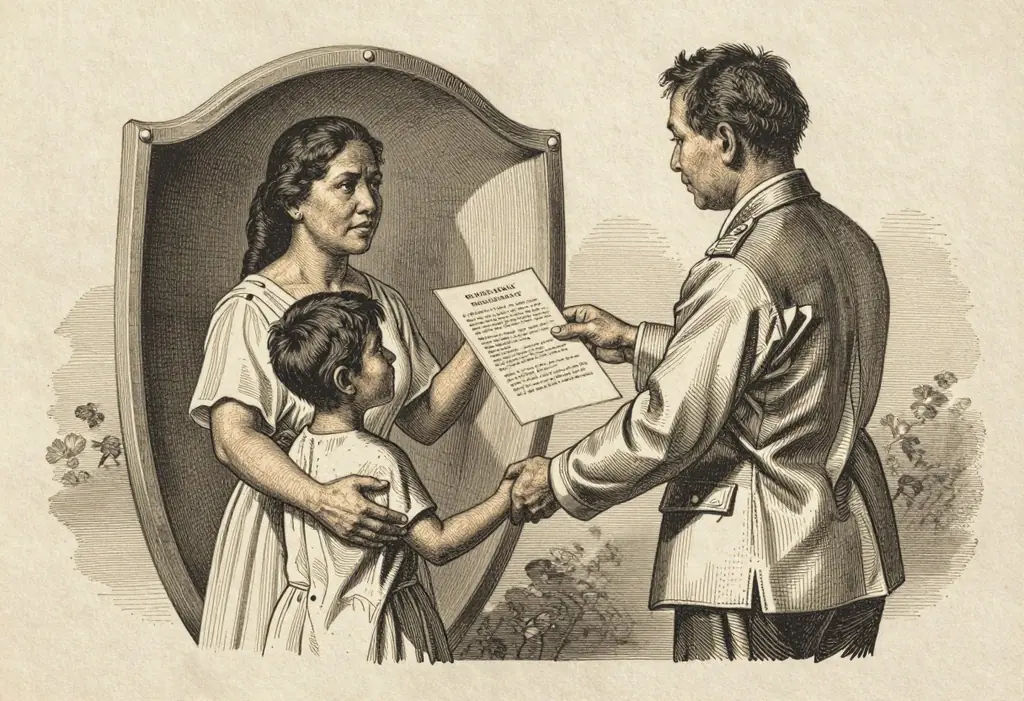 Full Plate
- Issued same day ex parte by Punong Barangay or Kagawad
- Valid for 15 days; non-extendable (must file in court thereafter)
- Restrains respondent from committing or threatening physical harm
- Cannot order child custody, financial support, or home eviction
- TPO acted upon within 24 hours; PPO issued after trial hearing
- TPO valid for 30 days (extendable); PPO is permanent
- Grants immediate temporary child custody to the mother
- Orders automatic salary deduction/garnishment for child support
- Orders removal of abuser from residence and confiscates firearms
Violation of any protection order is a criminal offense punishable by imprisonment under RA 9262 Section 12.
Why
Republic Act No. 9262 (the Anti-Violence Against Women and Their Children Act of 2004) provides immediate, powerful civil relief through three levels of Protection Orders: the Barangay Protection Order (BPO), the Temporary Protection Order (TPO), and the Permanent Protection Order (PPO). These orders are specifically designed to safeguard victims, stop domestic abuse, and restore peace without waiting for a lengthy criminal conviction.
A Barangay Protection Order (BPO) is the fastest emergency remedy. It is issued by the Punong Barangay (or an on-duty Kagawad if the Captain is unavailable) on the same day the application is filed, without notifying the respondent in advance (ex parte). A BPO is valid for 15 days and strictly orders the abuser to cease and desist from causing or threatening physical harm to the woman or her children. However, a BPO has statutory limits: it CANNOT order child support, award child custody, or evict the abuser from the conjugal residence.
A Temporary Protection Order (TPO) is issued by the Regional Trial Court (designated as a Family Court) or Municipal Trial Court if no Family Court is accessible. Under A.M. No. 04-10-11-SC, the judge must review the petition and issue the TPO on the very day of filing or within 24 hours. A TPO is valid for 30 days (extendable throughout the case) and has comprehensive relief: it can remove the abuser from the residence, award temporary custody of children to the mother, order the abuser's employer to automatically deduct child support from his salary, and direct the Philippine National Police (PNP) to escort the mother to retrieve personal belongings.
A Permanent Protection Order (PPO) is the final order issued after full notice and hearing, where both parties are given the chance to present evidence. Once issued, a PPO is permanent and enforceable anywhere in the Philippines. It permanently bars the abuser from coming within a specified distance of the victim, her children, their home, school, and workplace.
Violating any protection order (BPO, TPO, or PPO) is a separate criminal offense under Section 12 of RA 9262, punishable by imprisonment of 6 months to 1 year and a fine, independent of any prosecution for physical injuries or acts of violence committed. Furthermore, law enforcement officers who fail to respond to or enforce a protection order face criminal liability and administrative dismissal.
People also read

Can a father be compelled to pay child support in the Philippines, and can he refuse if he is unemployed or the child is illegitimate?
Yes. Both parents are legally obliged under the Family Code to support their child—whether the child is legitimate or illegitimate, once filiation is established—covering sustenance, housing, clothing, healthcare, education, and transportation, in proportion to the parent's means. A father who deliberately deprives the child of support legally due can also be prosecuted for economic abuse under RA 9262, which carries imprisonment.
Not lawyer-reviewedRead the answer
Can a mother deny visitation rights if the father does not pay child support?
No. Under Philippine law, child support and visitation rights are completely separate and independent legal duties. A mother cannot withhold a child from the father simply because he is delayed or delinquent in support, nor can a father legally stop paying child support because the mother is restricting visitation.
Not lawyer-reviewedRead the answer
How can a mother claim child support if the father is an OFW or a foreign citizen?
A mother can legally enforce child support against an OFW or foreign father through Philippine courts. For land-based OFWs and seafarers, courts can direct the manning agency or employer to garnish wages under mandatory POEA/DMW allotments; for foreign fathers, the Supreme Court ruled in Del Socorro v. Van Wilsem that foreign nationals residing in or visiting the Philippines cannot evade criminal liability under RA 9262 for withholding child support.
Not lawyer-reviewedRead the answer
What is the difference between annulment, declaration of nullity, and legal separation?
Of these three remedies, only a declaration of nullity and an annulment end the marriage bond and allow you to remarry; legal separation does not—the marriage bond remains intact and you cannot remarry. Which petition applies depends on whether the marriage was completely void from the outset (nullity), had a defect at the time of the wedding (annulment), or suffered a breakdown during the marriage (legal separation).
Not lawyer-reviewedRead the answer