General information, not legal advice. This answer was written by the PhilippineLaws team from the law it cites and checked for accuracy to the best of our knowledge, last on Sep 29, 2026. It has not been reviewed by a lawyer. Read the cited law yourself, and for your own situation talk to a lawyer or the Public Attorney’s Office (PAO).
Does the biological father have custody rights over a child born out of wedlock?
No. Under Article 176 of the Family Code (as amended by Republic Act No. 9255) and established Supreme Court doctrine (Masbate v. Relucio), sole parental authority and legal custody over an illegitimate child belong exclusively to the mother. A father who recognizes the child has visitorial rights and child support obligations, but cannot claim custody unless the mother is proven completely unfit in court.
Illustrated Legal Brief
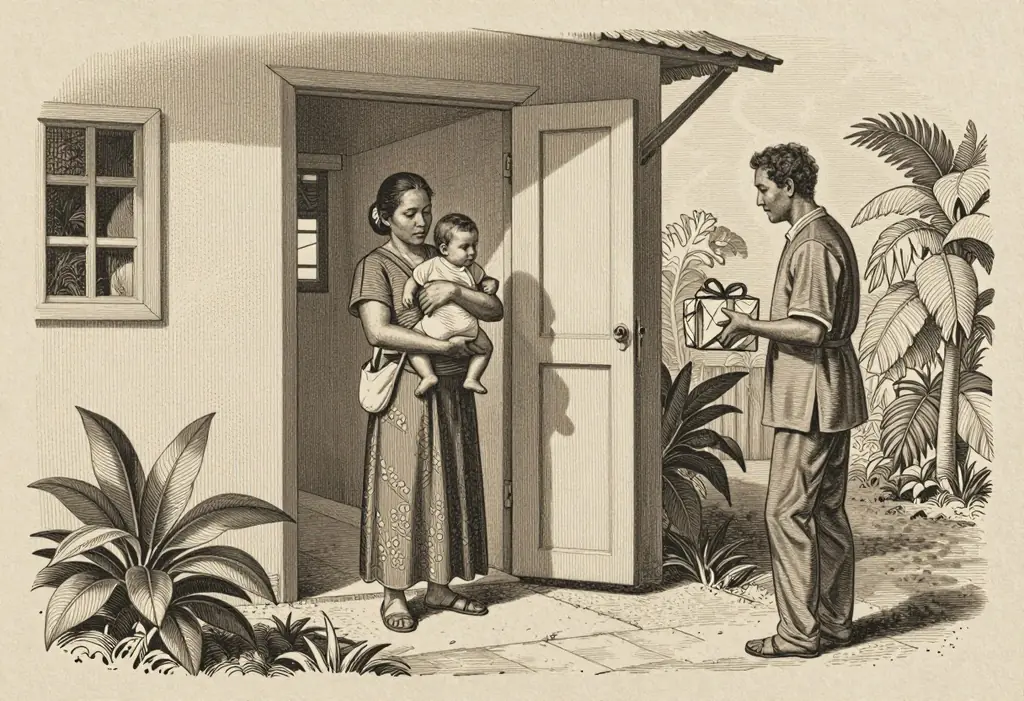 Full Plate
- Sole legal custody by statutory mandate
- Exclusive parental authority over the child
- Decides child's residence, schooling, and travel
- Can only be deprived of custody upon proof of unfitness
- Visitorial rights according to child's best interest
- Mandatory obligation to provide monthly child support
- Consent required for child to use father's surname
- Child is a compulsory heir entitled to one-half legitime
Under Masbate v. Relucio (G.R. No. 235498), sole custody belongs to the mother regardless of the father's financial capacity.
Why
In the Philippines, parental rights over children born out of wedlock (illegitimate children) differ fundamentally from the joint parental authority exercised by married parents. Under Article 176 of the Family Code, as amended by Republic Act No. 9255, an illegitimate child 'shall be under the parental authority of their mother.'
The Supreme Court affirmed this statutory rule in Masbate v. Relucio (G.R. No. 235498, July 30, 2018) and Briones v. Miguel: the mother is entitled to sole legal custody and parental authority by operation of law. An unmarried father cannot claim joint custody or wrest the child away from the mother simply because he earns more money, has recognized the child on the birth certificate, or provides financial support.
The only legal ground to deprive the mother of custody is clear and compelling evidence presented in Family Court showing that she is thoroughly unfit to care for the child. Unfitness requires extreme circumstances such as physical abuse, child abandonment, habitual drug abuse, gross neglect, or endangering the child's moral or physical safety. Mere poverty, joblessness, or being in a new relationship does not constitute unfitness under Philippine law.
A biological father who acknowledges paternity is granted visitorial rights to foster a healthy relationship with the child, provided the visits do not disrupt the child's well-being. Visitorial rights can be scheduled mutually or fixed by a Family Court.
Parental support is mandatory: recognizing paternity obligates the father to provide monthly child support under Article 194 of the Family Code. A father cannot make financial support conditional on receiving custody, nor can he refuse support because of disputes with the mother.
People also read
Can a father take custody of a child under 7 years old in the Philippines?
As a general rule, no. Under Article 213 of the Family Code (the 'Tender Years Doctrine'), no child under seven years of age shall be separated from the mother unless the court finds compelling reasons. The Supreme Court has ruled that compelling reasons are strictly confined to proven maternal unfitness—such as drug addiction, severe abuse, or habitual neglect—never mere poverty or marital separation.
Not lawyer-reviewedRead the answer
Can a mother deny visitation rights if the father does not pay child support?
No. Under Philippine law, child support and visitation rights are completely separate and independent legal duties. A mother cannot withhold a child from the father simply because he is delayed or delinquent in support, nor can a father legally stop paying child support because the mother is restricting visitation.
Not lawyer-reviewedRead the answer
Can a father be compelled to pay child support in the Philippines, and can he refuse if he is unemployed or the child is illegitimate?
Yes. Both parents are legally obliged under the Family Code to support their child—whether the child is legitimate or illegitimate, once filiation is established—covering sustenance, housing, clothing, healthcare, education, and transportation, in proportion to the parent's means. A father who deliberately deprives the child of support legally due can also be prosecuted for economic abuse under RA 9262, which carries imprisonment.
Not lawyer-reviewedRead the answer
Can an illegitimate child use the father's surname, and what are their inheritance rights?
Under Republic Act No. 9255, an illegitimate child may use the father's surname only if the father has expressly acknowledged paternity in the birth certificate, a public notarized document, or a private handwritten instrument. In inheritance, an illegitimate child whose filiation is established is a compulsory heir entitled to a legitime equal to one-half (50%) of the legitime of a legitimate child.
Not lawyer-reviewedRead the answer