General information, not legal advice. This answer was written by the PhilippineLaws team from the law it cites and checked for accuracy to the best of our knowledge, last on Sep 21, 2026. It has not been reviewed by a lawyer. Read the cited law yourself, and for your own situation talk to a lawyer or the Public Attorney’s Office (PAO).
I already had the incident blottered at the barangay or police. Does that mean a case has been filed?
No. A blotter is only a logbook record that you reported an incident; it does not start a case, summon the other person, or stop the deadline for filing. To actually pursue someone, you file a complaint with the Lupong Tagapamayapa for minor disputes between people living in the same city or municipality, or a sworn complaint-affidavit with the prosecutor's office.
Illustrated Legal Brief
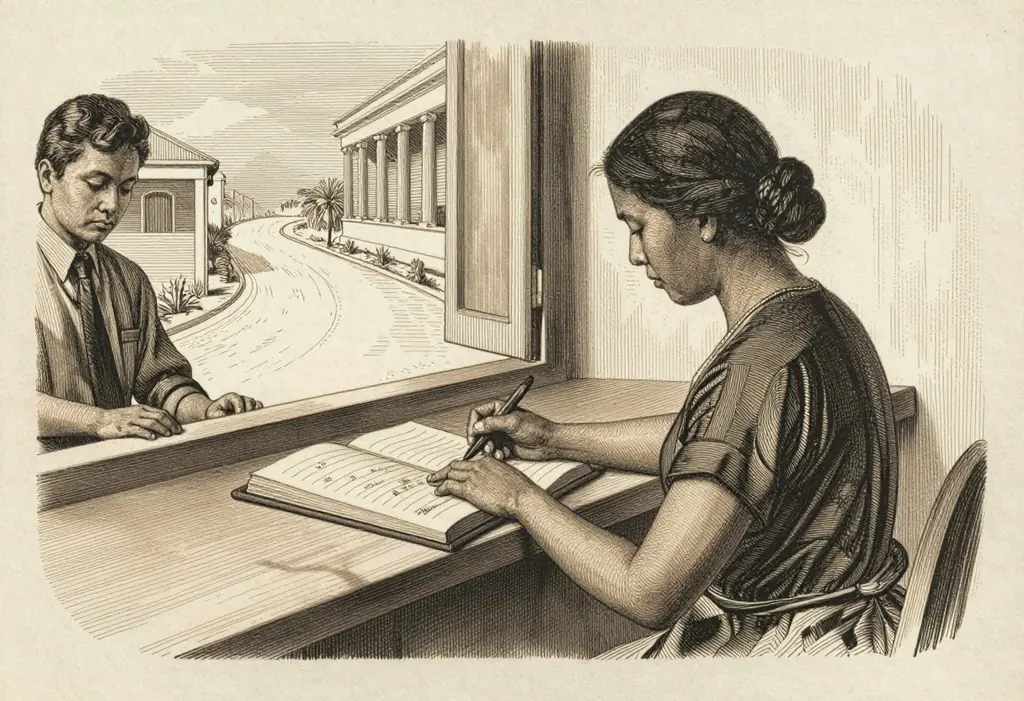 Full Plate
- Logs the date, time, and your account of the incident
- Useful as supporting evidence of a prompt report
- Does not summon or charge the other person
- Does not stop the prescription period
- Filed with the Lupon or the prosecutor's office
- The other party is summoned or required to answer
- Can lead to a binding settlement or a court case
- Interrupts prescription (at the barangay, for up to 60 days)
Light offenses prescribe in two months (Art. 90, RPC). Blotter the incident, then file the actual complaint without delay.
Why
A barangay or police blotter is a record of what was reported, when, and by whom. It is useful: it shows you reported promptly, it can show a pattern of repeated incidents, and it can support your later complaint. But no one is summoned, charged, or ordered to do anything because of a blotter entry. Many people blotter an incident, wait, and later find the time to file has run out.
Crimes must be prosecuted within fixed periods. Under Article 90 of the Revised Penal Code, light offenses prescribe in two months, oral defamation and slander by deed in six months, offenses punishable by arresto mayor in five years, and other offenses with correctional penalties in ten years. Under Article 91, the period is interrupted by the filing of a complaint or information, not by a blotter entry. A complaint filed with the punong barangay also interrupts it, but under Section 410(c) of the Local Government Code (RA 7160) that interruption cannot exceed 60 days from the filing. Offenses under special laws have their own periods.
For many everyday disputes, the barangay comes first. Under Sections 408 and 412 of RA 7160, disputes between individuals actually residing in the same city or municipality must go through the Lupong Tagapamayapa before anyone can file in court or with the prosecutor. This covers offenses punishable by no more than one year of imprisonment and no more than a ₱5,000 fine, but not disputes where one party is the government, offenses with no private offended party, or, as a rule, parties living in different cities or municipalities. Under Section 412(b), you may go directly to court when the accused is detained, when habeas corpus is needed, when you need an urgent provisional remedy such as an injunction, or when the case would otherwise prescribe.
At the barangay, you complain orally or in writing to the punong barangay and pay the filing fee. The respondent is summoned by the next working day. If mediation fails within 15 days, a pangkat (conciliation panel) is formed, which has 15 days, extendible by another 15, to help the parties settle. Parties appear in person without lawyers (Section 415). A signed amicable settlement has the force of a final judgment after 10 days unless repudiated (Section 416). If there is no settlement, the barangay issues a certification that lets you file the case.
For more serious offenses, or once you have that certification, you file a sworn complaint-affidavit with the Office of the City or Provincial Prosecutor, together with your witnesses' affidavits and evidence such as a medical certificate, photos, or screenshots. The prosecutor evaluates it and, where required, conducts a preliminary investigation in which the respondent answers with a counter-affidavit, and then decides whether to file the case in court. Violence against women and their children is an exception to barangay conciliation: Section 33 of RA 9262 makes the Katarungang Pambarangay procedure inapplicable to those cases.
People also read
My husband or boyfriend doesn't hit me, but he humiliates me, controls our money, cheats, or stopped supporting our child. Is that a VAWC case?
It can be. RA 9262 punishes not only physical and sexual violence but also psychological violence, such as repeated verbal abuse, public humiliation, stalking, and mental infidelity that cause mental or emotional suffering, and economic abuse, such as withdrawing or denying financial support. It protects a wife, former wife, a woman in a present or past dating or sexual relationship, a woman who has a child with the offender, and her children. VAWC is a public crime that does not go through barangay conciliation.
Not lawyer-reviewedRead the answer
Someone keeps threatening me by text and chat, saying they'll hurt me or my family. Is that a crime, and what can I do?
Yes, it can be. Threatening to inflict on you or your family, or on your property, a wrong that would itself be a crime, such as killing, hurting, or burning, is grave threats under Article 282 of the Revised Penal Code; threats of lesser wrongs are light threats or other light threats. When the threat is sent through text, chat, or social media, the Cybercrime Prevention Act raises the penalty by one degree, so save the messages and report them.
Not lawyer-reviewedRead the answer
Someone borrowed money from me and won't pay it back. Can I file estafa and have them jailed?
Usually not. Failing to pay a loan is a civil matter, because the Constitution says no one may be imprisoned for debt; estafa applies only when there was deceit at the start, such as a fake identity or invented property used to get the money, or when money handed over in trust for a specific purpose was misappropriated. For an ordinary unpaid utang, the remedy is a written demand, barangay conciliation, and a collection case such as small claims.
Not lawyer-reviewedRead the answer
How can a mother get an immediate protection order (BPO, TPO, PPO) against an abusive partner under RA 9262?
A mother facing domestic abuse can obtain an immediate Barangay Protection Order (BPO) valid for 15 days from the Punong Barangay to prohibit violence and harassment. To secure temporary child custody, court-ordered child support, and exclusion of the abuser from the home, she must file for a Temporary Protection Order (TPO) in Family Court, which judges must act upon ex parte within 24 hours.
Not lawyer-reviewedRead the answer