General information, not legal advice. This answer was written by the PhilippineLaws team from the law it cites and checked for accuracy to the best of our knowledge, last on Sep 21, 2026. It has not been reviewed by a lawyer. Read the cited law yourself, and for your own situation talk to a lawyer or the Public Attorney’s Office (PAO).
Someone keeps threatening me by text and chat, saying they'll hurt me or my family. Is that a crime, and what can I do?
Yes, it can be. Threatening to inflict on you or your family, or on your property, a wrong that would itself be a crime, such as killing, hurting, or burning, is grave threats under Article 282 of the Revised Penal Code; threats of lesser wrongs are light threats or other light threats. When the threat is sent through text, chat, or social media, the Cybercrime Prevention Act raises the penalty by one degree, so save the messages and report them.
Illustrated Legal Brief
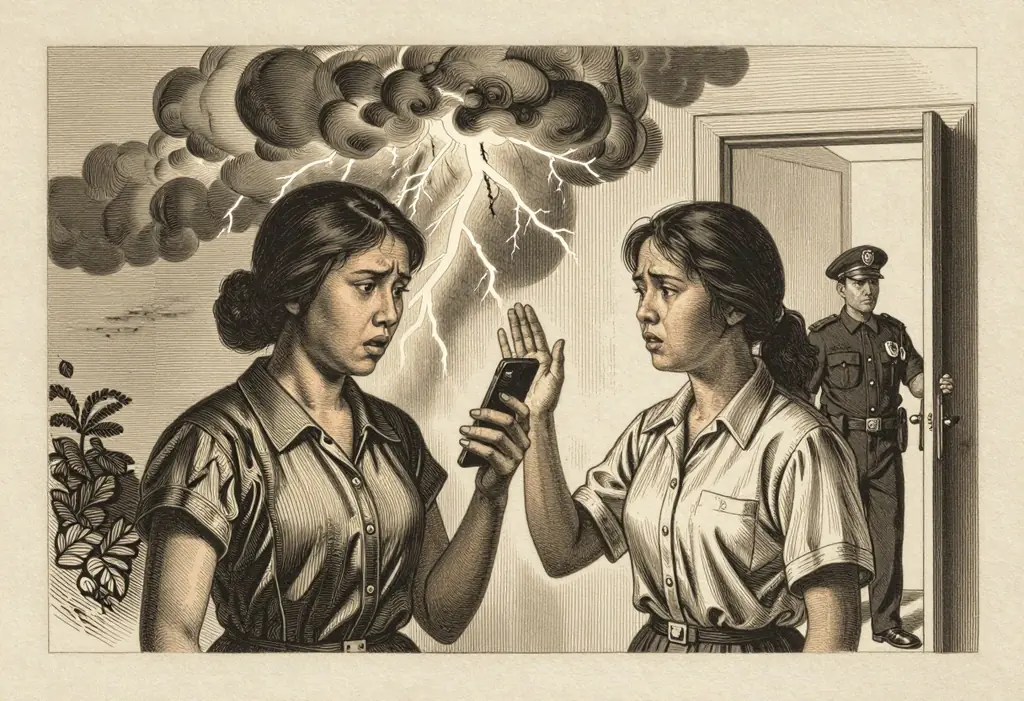 Full Plate
- "Papatayin kita," or a threat to beat you or burn your house
- Penalty tied to the crime threatened if money or a condition was demanded
- Heavier when made in writing or through a middleman
- Arresto mayor and a fine when no condition was attached
- A threatened wrong that is not a crime, made with a demand (Art. 283)
- Drawing a weapon in a quarrel, not in self-defense (Art. 285)
- Oral threats of non-criminal harm (Art. 285)
- Other light threats prescribe in only two months
Sent through text, chat, or social media? RA 10175, Sec. 6 raises the penalty by one degree.
Why
Under Article 282 of the Revised Penal Code, grave threats is committed by anyone who threatens another with inflicting on him, his honor, his property, or his family any wrong amounting to a crime. The penalty depends on the threat. If the offender demanded money or imposed any other condition, the penalty is tied to the crime threatened: one degree lower if he got what he wanted and two degrees lower if he did not, and imposed in its maximum period if the threat was made in writing or through a middleman. If the threat was not subject to any condition, the penalty is arresto mayor (one month and one day to six months) and a fine.
Lesser threats have their own articles. Article 283 (light threats) covers a threat to commit a wrong that is not a crime, made with a demand or condition, and is punished by arresto mayor. Article 285 (other light threats) covers threatening someone with a weapon or drawing a weapon in a quarrel other than in lawful self-defense, orally threatening harm that is not a crime, and threats made in the heat of anger that the person does not persist in. Under Article 284, a court may also require the person who made grave or light threats to post a bond not to molest the person threatened.
Section 6 of the Cybercrime Prevention Act (RA 10175) covers crimes under the Revised Penal Code committed by, through, and with the use of information and communications technologies, and imposes a penalty one degree higher. Threats that are gender-based, sexual, or misogynistic, or that come with cyberstalking or incessant messaging, may also be gender-based online sexual harassment under Section 12 of the Safe Spaces Act (RA 11313), which the PNP Anti-Cybercrime Group receives complaints for. If the person threatening you is your husband, ex-partner, boyfriend, or the father of your child, threatening to cause you or your child physical harm is also violence against women and their children under Section 5 of RA 9262, and you can ask for a protection order.
Timing matters. Under Article 90 of the Revised Penal Code, light offenses such as other light threats under Article 285 prescribe in just two months, while offenses punishable by arresto mayor prescribe in five years. Threats between neighbors or acquaintances living in the same city or municipality may first have to go through barangay conciliation under RA 7160 when the penalty is low. Threats punished more heavily, including many online threats because of RA 10175's one-degree increase, fall outside the barangay's authority and go straight to the prosecutor.
Your evidence is usually the messages themselves. Keep the original phone or account, and do not delete the conversation even after taking screenshots, because investigators and prosecutors may need to confirm that the messages are real and came from the sender's number or account.
People also read
I was scammed through GCash or online bank transfer. How can I recover my money and file criminal charges?
Report the fraud to GCash or your bank's fraud desk right away and ask them to hold the disputed funds in the recipient account, then file a cybercrime report with the PNP Anti-Cybercrime Group (PNP-ACG) or NBI Cybercrime Division. Recovery is not guaranteed and depends largely on whether the money is still in the recipient account. Under the Anti-Financial Account Scamming Act (AFASA / RA 12010) and the Cybercrime Prevention Act, scammers and money mules can face imprisonment and fines.
Not lawyer-reviewedRead the answer
Someone posted my private chat, phone number, and address online. Can I sue for doxxing?
Yes. Publishing your private mobile number, residential address, or intimate chat messages online without your consent is illegal under the Data Privacy Act of 2012 (Republic Act No. 10173) and carries higher penalties under the Cybercrime Prevention Act. You can file a formal complaint with the National Privacy Commission (NPC) and file criminal charges for unauthorized disclosure.
Not lawyer-reviewedRead the answer
Can I be sued for cyberlibel over a Facebook post or comment?
Yes. Defamatory Facebook posts or comments can constitute cyberlibel under Republic Act No. 10175, which carries a heavier penalty than ordinary libel. However, truth published with good motives and for justifiable ends is a defense, and the Supreme Court has held that cyberlibel cannot be applied to people who merely receive a post and react to it, such as by liking or sharing it, without adding defamatory remarks of their own.
Not lawyer-reviewedRead the answer
I already had the incident blottered at the barangay or police. Does that mean a case has been filed?
No. A blotter is only a logbook record that you reported an incident; it does not start a case, summon the other person, or stop the deadline for filing. To actually pursue someone, you file a complaint with the Lupong Tagapamayapa for minor disputes between people living in the same city or municipality, or a sworn complaint-affidavit with the prosecutor's office.
Not lawyer-reviewedRead the answer