General information, not legal advice. This answer was written by the PhilippineLaws team from the law it cites and checked for accuracy to the best of our knowledge, last on Sep 21, 2026. It has not been reviewed by a lawyer. Read the cited law yourself, and for your own situation talk to a lawyer or the Public Attorney’s Office (PAO).
My relative was arrested without a warrant. How long can the police hold him before a case is filed, and what is an inquest?
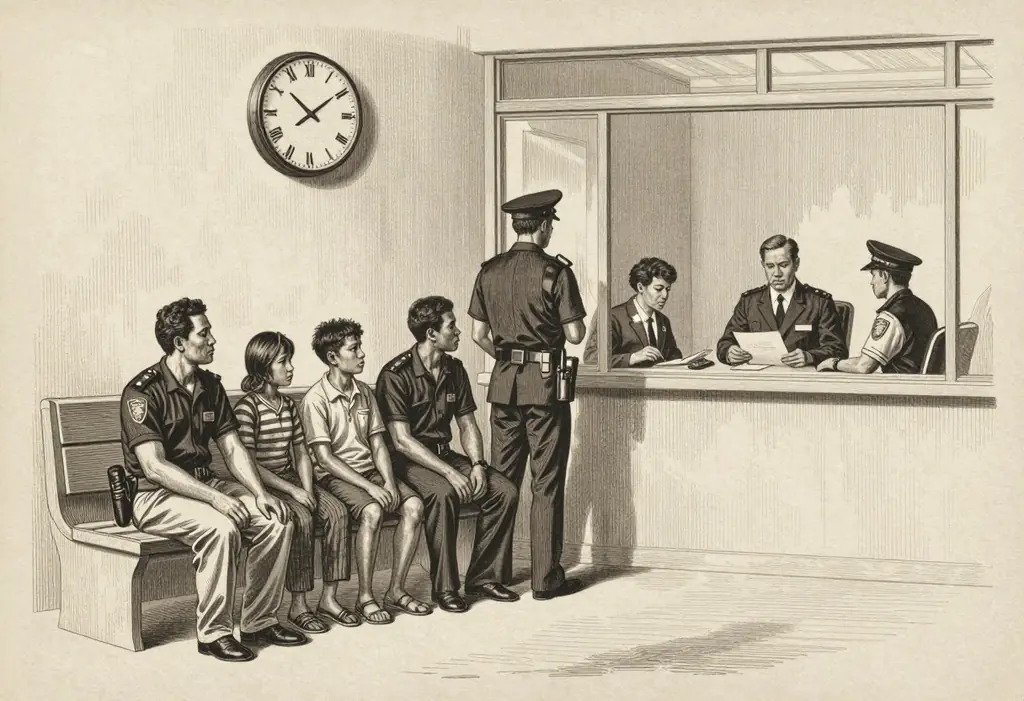
Under Article 125 of the Revised Penal Code, a person arrested without a warrant must be delivered to the proper judicial authorities within 12, 18, or 36 hours, depending on whether the offense carries a light, correctional, or afflictive penalty. In practice this means an inquest prosecutor must file the case in court within that time or the person should be released, and throughout the detention he has the right to remain silent and to a lawyer.
Illustrated Legal Brief
 Full Plate
| Situation | Rate |
|---|---|
| Light penaltiesOffenses punished by arresto menor or public censure | 12 hours |
| Correctional penaltiesOffenses punished by arresto mayor or prision correccional | 18 hours |
| Afflictive or capital penaltiesOffenses punished by prision mayor or heavier | 36 hours |
A detainee can give up these periods to ask for a full preliminary investigation, but the waiver is void unless written and signed in the presence of counsel (RA 7438, Sec. 2).
Why
Article III, Section 2 of the 1987 Constitution generally requires a judge-issued warrant before anyone is arrested. Rule 113, Section 5 of the Rules of Court allows a warrantless arrest only in narrow situations: when the person is caught committing, attempting, or having just committed an offense in the officer's presence; when an offense has just been committed and the officer has probable cause based on personal knowledge of facts that this person did it; or when the person is an escaped prisoner. Someone arrested this way must be brought to the nearest police station or jail and proceeded against under Rule 112.
Article 125 of the Revised Penal Code, as amended by Executive Order No. 272 (1987), sets hard limits on how long that person may be held: 12 hours for offenses punishable by light penalties, 18 hours for offenses punishable by correctional penalties, and 36 hours for offenses punishable by afflictive or capital penalties. In every case the detainee must be told the cause of his detention and must be allowed, on request, to communicate and confer with his lawyer at any time. A public officer who holds someone beyond these periods faces the penalties for arbitrary detention under Article 124.
An inquest is the quick review a prosecutor conducts while the person is still detained, to decide whether the warrantless arrest was valid and whether there is enough basis to file a charge in court. If the prosecutor files the charge, the case moves to court, where the person can apply for bail. If not, the person should be released, although the complaint may still be pursued through a regular preliminary investigation. The arrested person may instead ask for a full preliminary investigation before any charge is filed, but he must first sign a waiver of Article 125, and under Section 2 of Republic Act No. 7438 that waiver is void unless it is in writing and signed in the presence of his lawyer. Even with the waiver, he may still apply for bail, and the Rules of Court require that preliminary investigation to end within 15 days from its start.
Throughout custody, Article III, Section 12 of the Constitution and RA 7438 guarantee the right to be told, in a language the person understands, of the right to remain silent and to have competent and independent counsel, preferably of his own choice; a lawyer must be provided if he cannot afford one. Any extrajudicial confession must be in writing and signed in the presence of counsel, or it is inadmissible. The detainee may be visited by his immediate family, a doctor, or a priest or religious minister. RA 7438 also treats an 'invitation' to the station of a person suspected of an offense as custodial investigation, so these rights apply even if he was only 'invited'.
Under Article III, Section 13 of the Constitution, everyone is entitled to bail before conviction, except those charged with offenses punishable by reclusion perpetua when the evidence of guilt is strong. If the person was arrested on a warrant rather than without one, a court has already issued it, so the Article 125 countdown is not the main issue; the usual next step is to apply for bail in that court.
People also read
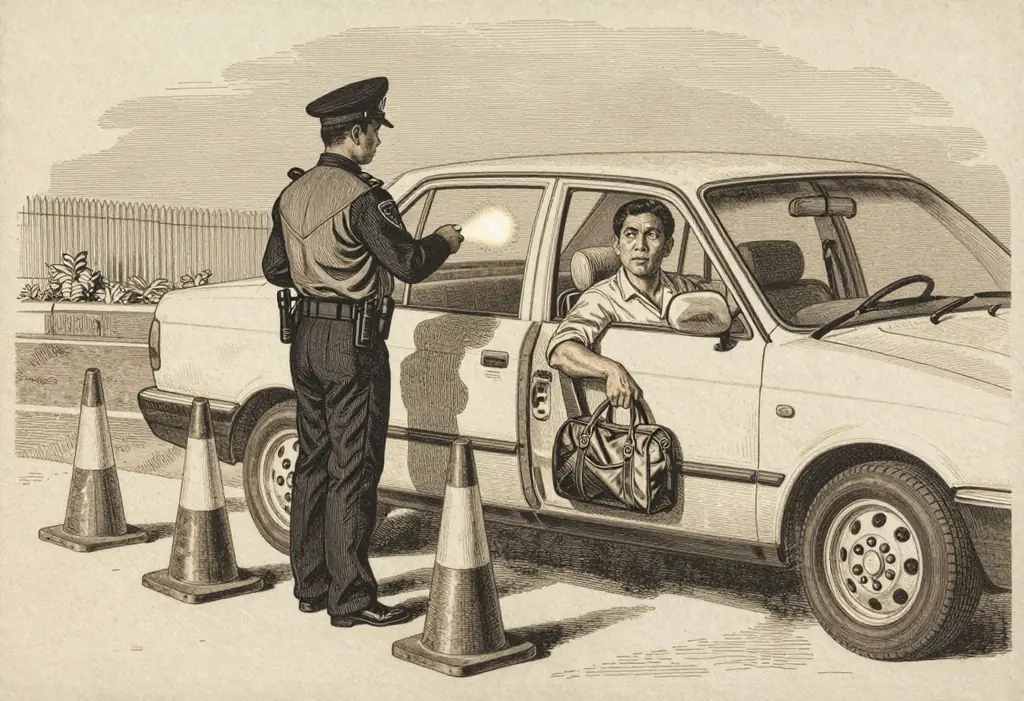
Can police search inside my car, open my bag, or inspect my phone at a routine checkpoint?
Generally no. At a routine police checkpoint, the Supreme Court limits the inspection to a visual look into the vehicle. Without a warrant, officers may not open your doors, glove compartment, or trunk, search your bags, or go through your phone unless there is probable cause (specific facts pointing to a crime) or you freely and voluntarily consent.
Not lawyer-reviewedRead the answer
Someone borrowed money from me and won't pay it back. Can I file estafa and have them jailed?
Usually not. Failing to pay a loan is a civil matter, because the Constitution says no one may be imprisoned for debt; estafa applies only when there was deceit at the start, such as a fake identity or invented property used to get the money, or when money handed over in trust for a specific purpose was misappropriated. For an ordinary unpaid utang, the remedy is a written demand, barangay conciliation, and a collection case such as small claims.
Not lawyer-reviewedRead the answer
Can I secretly record a phone call or private conversation to use as evidence?
No — secretly recording a private conversation or phone call without the consent of all parties is a crime under Republic Act No. 4200 (the Anti-Wiretapping Act). Any recording made without everyone's knowledge is completely inadmissible as evidence in any court, administrative hearing, or official proceeding.
Not lawyer-reviewedRead the answer
I already had the incident blottered at the barangay or police. Does that mean a case has been filed?
No. A blotter is only a logbook record that you reported an incident; it does not start a case, summon the other person, or stop the deadline for filing. To actually pursue someone, you file a complaint with the Lupong Tagapamayapa for minor disputes between people living in the same city or municipality, or a sworn complaint-affidavit with the prosecutor's office.
Not lawyer-reviewedRead the answer