General information, not legal advice. This answer was written by the PhilippineLaws team from the law it cites and checked for accuracy to the best of our knowledge, last on Sep 25, 2026. It has not been reviewed by a lawyer. Read the cited law yourself, and for your own situation talk to a lawyer or the Public Attorney’s Office (PAO).
Can I recover money sent by accident to the wrong GCash or Maya number, and can the recipient legally keep it?
No, the recipient cannot legally keep the money. Under the Civil Code principle of solutio indebiti, anyone who receives money delivered by mistake has a legal obligation to return it. Keeping and spending it after notice can constitute unjust enrichment or civil fraud, but you must act quickly with the e-wallet provider and your bank before the funds are withdrawn.
Illustrated Legal Brief
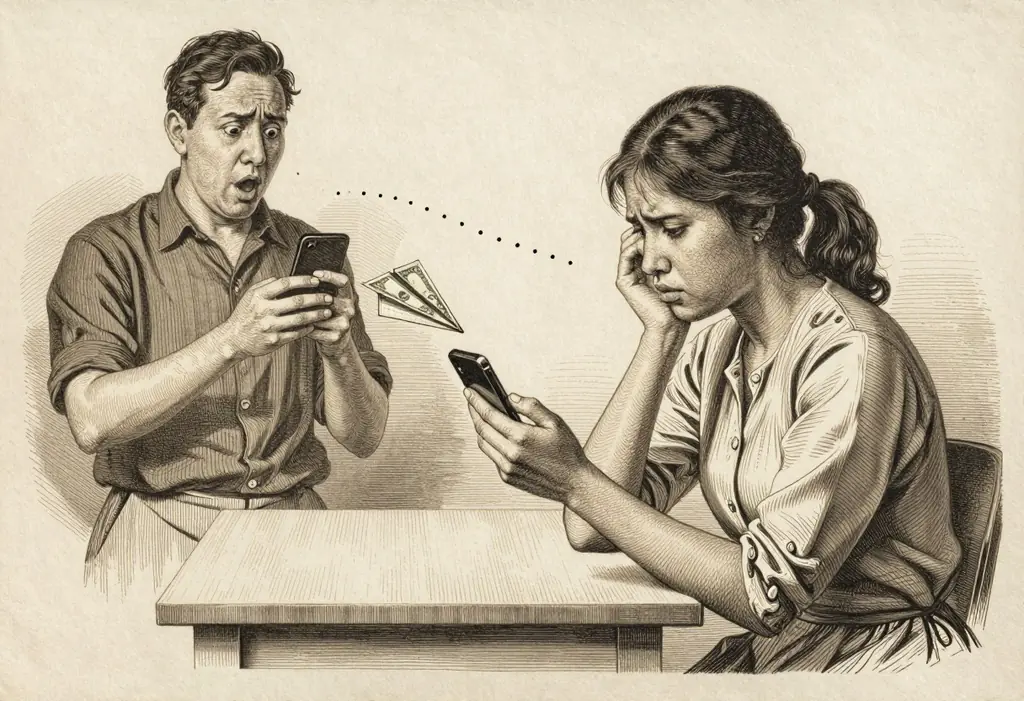 Full Plate
- Minute 0
Preserve transaction evidence
Save the reference number, sender receipt, and exact timestamp.
- First hour
File ticket with e-wallet provider
Report wrongful delivery before the funds are cashed out.
- 24–48 hours
Formal demand to recipient
Send written notice requesting return pursuant to Civil Code Art. 2154.
- Recourse
Barangay / Small Claims / PNP-ACG
If recipient refuses to return, file for recovery through Small Claims Court or cybercrime assistance.
Why
Under Article 2154 of the Civil Code, if something is received when there is no right to demand it, and it was unduly delivered through mistake, the obligation to return it arises. This quasi-contractual principle (solutio indebiti) means that an accidental e-wallet transfer does not make the recipient the rightful owner.
Bangko Sentral ng Pilipinas (BSP) Circular No. 1160 and consumer protection guidelines require electronic money issuers (EMIs) to maintain dispute resolution procedures. However, e-wallet transactions are processed in real-time. Providers like GCash and Maya cannot unilaterally reverse a completed transaction without the recipient's consent or a court order, to protect users from fraudulent chargeback claims.
If the recipient acknowledges receipt and refuses to return the money despite formal demand, they incur civil liability for unjust enrichment under Article 22 of the Civil Code. Depending on the circumstances—such as actively refusing to return funds after notice or using deceptive means—criminal complaints for estafa (other deceits under RPC Art. 318) or small claims civil suits can be filed.
If the recipient's wallet is unverified or unregistered, the provider's compliance team can freeze or hold the unverified account pending dispute resolution.
People also read
Someone owes me money and refuses to pay. How do I sue in Small Claims Court without a lawyer?
You can file a Statement of Claim in the first-level court (Metropolitan or Municipal Trial Court) for money claims up to ₱1,000,000 (excluding interest and costs) without hiring a lawyer. Lawyers may not appear for a party at the hearing, and the judge decides promptly after a single hearing. The decision is final and cannot be appealed.
Not lawyer-reviewedRead the answer
I was scammed through GCash or online bank transfer. How can I recover my money and file criminal charges?
Report the fraud to GCash or your bank's fraud desk right away and ask them to hold the disputed funds in the recipient account, then file a cybercrime report with the PNP Anti-Cybercrime Group (PNP-ACG) or NBI Cybercrime Division. Recovery is not guaranteed and depends largely on whether the money is still in the recipient account. Under the Anti-Financial Account Scamming Act (AFASA / RA 12010) and the Cybercrime Prevention Act, scammers and money mules can face imprisonment and fines.
Not lawyer-reviewedRead the answer
The store has a 'No return, no exchange' sign and refuses to replace an item that turned out to be defective. Is that allowed?
Not for defective goods. Under the Consumer Act (Republic Act No. 7394), sellers are liable for defects that make a product unfit or reduce its value, and a store sign cannot waive that. You can demand repair of the defect, and if it is not fixed within 30 days, a replacement, a refund, or a price reduction. A store may, however, refuse a return if you simply changed your mind about a product that has nothing wrong with it.
Not lawyer-reviewedRead the answer
I ordered something online and received the wrong item, a fake, or a broken one, and the seller won't refund me. What are my rights?
Under the Internet Transactions Act of 2023 (Republic Act No. 11967), an online merchant must deliver goods in the same condition, type, quantity and quality as described, and if they are defective or do not conform you can demand repair, replacement or a refund under the Consumer Act. Use the platform's or seller's internal complaint process first; if it is unresolved after seven calendar days, you may go to the DTI. The seller is primarily liable, and the platform can be held subsidiarily liable in specific cases.
Not lawyer-reviewedRead the answer