General information, not legal advice. This answer was written by the PhilippineLaws team from the law it cites and checked for accuracy to the best of our knowledge, last on Sep 21, 2026. It has not been reviewed by a lawyer. Read the cited law yourself, and for your own situation talk to a lawyer or the Public Attorney’s Office (PAO).
People built houses on my land without permission. How do I legally remove informal settlers?
Through the courts, not by force. Depending on how and when they entered, you file forcible entry or unlawful detainer within one year under Rule 70, or a longer case to recover possession or ownership after that; if the occupants are underprivileged and homeless, the eviction and demolition must also follow the notice, consultation, and relocation rules of Section 28 of the Urban Development and Housing Act (RA 7279). Squatting itself stopped being a crime when PD 772 was repealed, except for professional squatters and squatting syndicates.
Illustrated Legal Brief
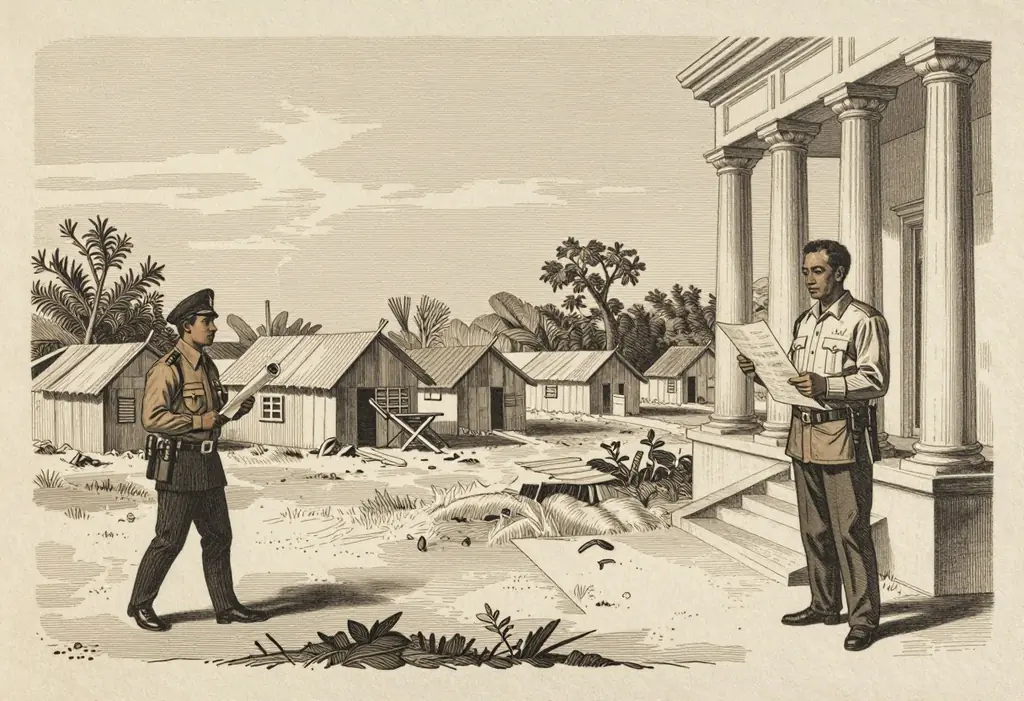 Full Plate
Written Demand to Vacate
Serve it on the occupants or post it on the premises, and keep proof
Barangay Conciliation
Required first when the parties are individuals residing in the same city or municipality
File the Right Case
Forcible entry or unlawful detainer within 1 year; accion publiciana or reivindicatoria after that
Caution: Relocation Within 45 Days
For underprivileged and homeless families, the LGU and NHA relocate them within 45 days from notice of final judgment
Allowed: Sheriff Enforces the Writ
At least 30 days' notice, LGU officials present, weekdays in office hours and good weather
Demolishing occupied homes without a court order, or without the RA 7279, Sec. 28 safeguards, can expose the owner to liability.
Why
An owner cannot simply bulldoze houses already standing on his land. Article 429 of the Civil Code allows reasonable force only to repel an actual or threatened invasion as it happens, and Article 536 requires anyone who claims a right to property held by another to go to court if the occupant refuses to leave. Tearing down homes yourself, or with hired men and no court order, can expose you to criminal and civil liability.
The right case depends on how the occupants came in and how long ago. Under Rule 70, Section 1 of the Rules of Court, if they entered by force, intimidation, threat, strategy, or stealth, the case is forcible entry, filed in the first-level court within one year. If you or your family allowed or tolerated their stay, for example a former caretaker or relatives, and you have now withdrawn that permission, the case is unlawful detainer: serve a written demand to vacate first, then file within one year from the demand. After the one-year window, you file an action to recover possession (accion publiciana) or ownership (accion reivindicatoria), which goes to the first-level court if the property's assessed value is ₱400,000 or less and to the Regional Trial Court if higher (BP 129 as amended by RA 11576). If you and the occupants are individuals living in the same city or municipality, barangay conciliation generally comes first.
Section 28 of RA 7279 discourages eviction and demolition as a practice, but allows it when people occupy danger areas or public places such as esteros, railroad tracks, riverbanks, sidewalks, and parks; when a funded government infrastructure project is about to start; or when there is a court order. When the eviction involves underprivileged and homeless citizens, the law makes these mandatory: notice at least 30 days before the eviction or demolition; adequate consultation on resettlement; the presence of local government officials; proper identification of everyone taking part; demolition only on weekdays during regular office hours and in good weather, unless the families agree otherwise; no heavy equipment except for permanent concrete structures; uniformed police in the front line; and adequate relocation. For court-ordered evictions, the LGU and the National Housing Authority must carry out relocation within 45 days from service of notice of the final judgment, after which the order is executed; if relocation is not possible within that period, the LGU must give each affected family financial assistance equal to the prevailing minimum daily wage multiplied by 60 days.
Squatting as such is no longer a crime. RA 8368 (1997) repealed PD 772, the old anti-squatting law. What remains punishable is being a professional squatter or a member of a squatting syndicate under Section 27 of RA 7279: people who occupy land without the owner's consent even though they have enough income for legitimate housing, people who sold or leased a government housing award and settled illegally again, and groups running squatter housing for profit. They may be summarily evicted and face a penalty of six years' imprisonment, a fine of ₱60,000 to ₱100,000, or both. The definition excludes people who merely rent from such syndicates. Separately, taking possession of real property by violence or intimidation is punished under Article 312 of the Revised Penal Code.
As for the houses themselves, Article 449 of the Civil Code provides that one who builds in bad faith on another's land loses what he built without right to indemnity, and Article 450 lets the owner demand demolition at the builder's expense. Those rights are still enforced through the court and its sheriff, with the Section 28 safeguards where they apply. For titled land, Section 47 of the Property Registration Decree (PD 1529) means occupants cannot acquire it by prescription however long they stay.
People also read
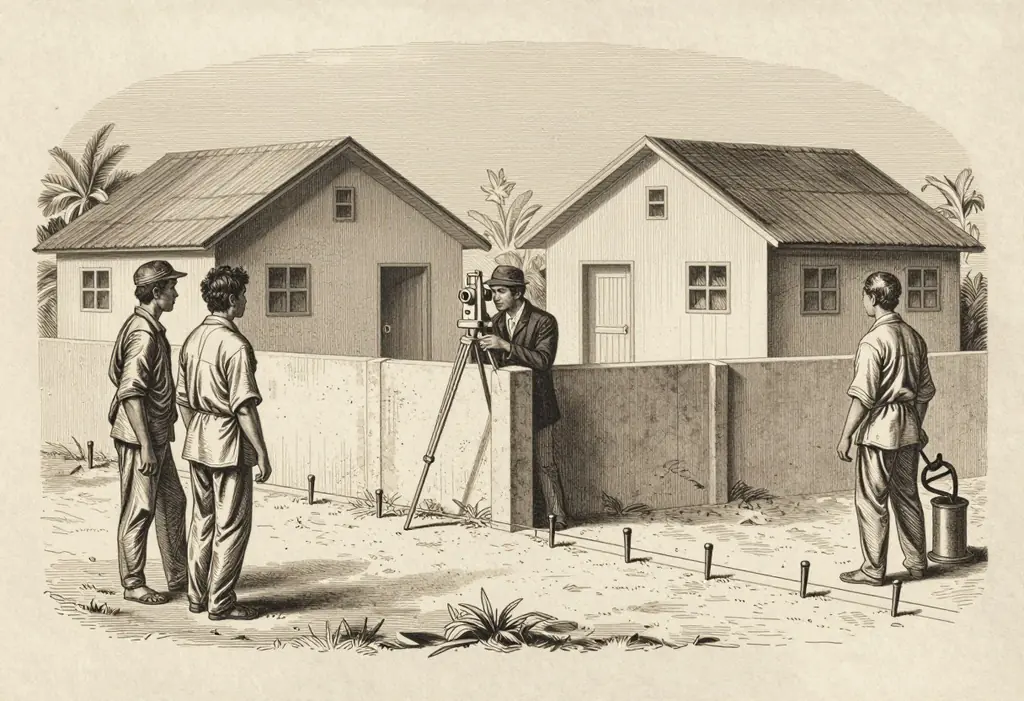
My neighbor's fence or house extension is built over our boundary line. What can I do?
First prove where the line really is, through a relocation survey by a licensed geodetic engineer based on the technical description in your title, then bring the dispute to the barangay where the land is. If that fails, a court can order the encroached portion returned; what happens to a structure on your side depends on whether it was built in good or bad faith (Civil Code, Arts. 448–453).
Not lawyer-reviewedRead the answer
Our parent died without a will and left land still titled in their name. How do we transfer it to the heirs?
If there is no will and no unpaid debts, and all heirs are of age or minors are properly represented, the heirs can settle the estate without going to court: sign a notarized extrajudicial settlement, publish it in a newspaper once a week for three consecutive weeks, pay the estate tax, and present the BIR clearance to the Register of Deeds for new titles (Rule 74, Rules of Court). If the heirs cannot agree, the remedy is a court action for partition or judicial settlement.
Not lawyer-reviewedRead the answer
The seller is selling land inherited from their deceased parents, but the title is still in the parents' name. Is it safe to buy, and what is an Extrajudicial Settlement with Sale?
It is risky unless all legal heirs sign the Extrajudicial Settlement with Deed of Absolute Sale, estate taxes are settled with the BIR, and publication is completed. Even after registration, Section 4 of Rule 74 annotates a statutory 2-year lien on the new title protecting excluded heirs and unpaid estate creditors.
Not lawyer-reviewedRead the answer
How much can a landlord increase rent each year in the Philippines?
Under Republic Act No. 9653 (the Rent Control Act) and DHSUD regulations, rent for covered residential units cannot be raised beyond the statutory annual ceiling (typically 4% to 7% for continuing tenants). Landlords are also strictly forbidden from demanding more than one month advance rent and two months security deposit.
Not lawyer-reviewedRead the answer