General information, not legal advice. This answer was written by the PhilippineLaws team from the law it cites and checked for accuracy to the best of our knowledge, last on Sep 21, 2026. It has not been reviewed by a lawyer. Read the cited law yourself, and for your own situation talk to a lawyer or the Public Attorney’s Office (PAO).
Do I still have to pay the ₱500 BIR Annual Registration Fee? What changed for small businesses under the Ease of Paying Taxes (EOPT) Act?
No. The Ease of Paying Taxes Act (Republic Act No. 11976) rewrote the Tax Code's registration section without the old ₱500 Annual Registration Fee, so there is no yearly BIR registration fee anymore; you register once. It also replaced official receipts with sales or commercial invoices, lets returns be filed and taxes paid electronically or manually through any authorized agent bank, Revenue District Office or authorized tax software provider, and gives micro and small taxpayers lower penalties.
Illustrated Legal Brief
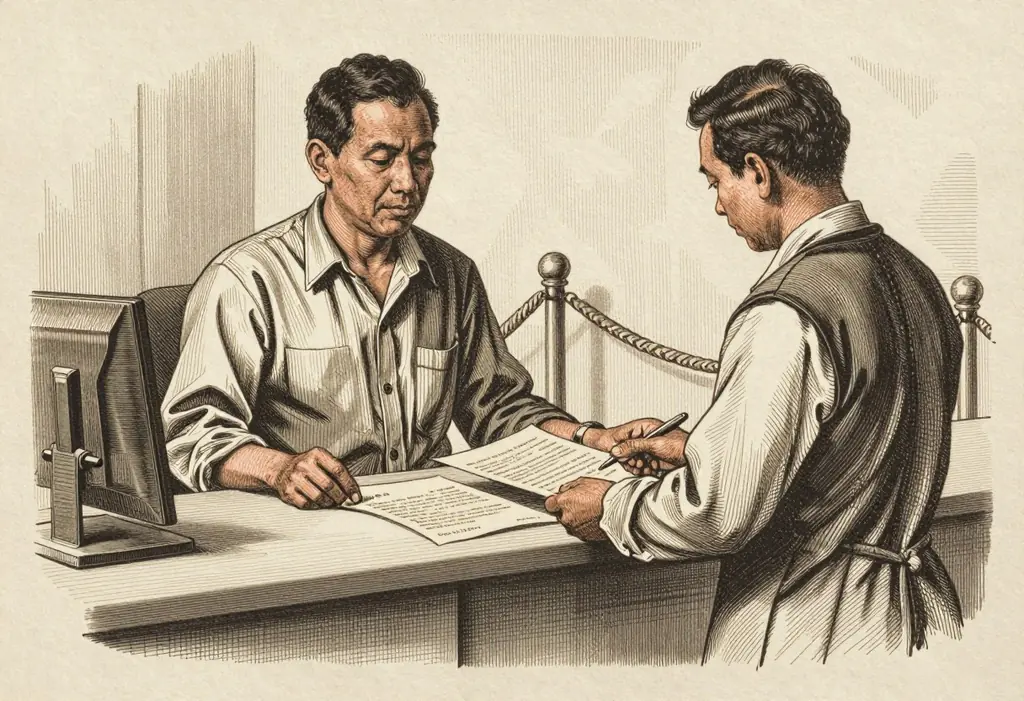 Full Plate
- ₱500 Annual Registration Fee per establishment, every January
- Official receipts for fees and services, invoices for goods, from ₱100 per sale (under TRAIN)
- Fewer filing and payment channels spelled out in the Code
- Same civil penalty (25%) regardless of business size
- Register once; no annual registration fee
- Sales or commercial invoices for all sales of ₱500 or more, or on request
- File and pay electronically or manually via any authorized agent bank, RDO or tax software provider
- Micro and small taxpayers: 10% civil penalty, 50% lower interest, 2-page ITR
The EOPT Act lowers penalties, not taxes. Micro taxpayers are those with gross sales below ₱3 million.
Why
The old Section 236(B) of the National Internal Revenue Code imposed an annual registration fee of ₱500 for every separate establishment, payable on registration and every January after that. Section 34 of the Ease of Paying Taxes Act (Republic Act No. 11976, approved January 5, 2024) rewrote Section 236 without that subsection: registration is now done once, electronically or manually, on or before you start your business, and Subsection (B) now simply requires you to register each type of tax you are liable for. Sections 37 to 39 of the Act also removed the references to the annual registration fee from the Code's provisions on displaying your certificate, continuing a deceased owner's business, and moving your business to another location.
Registration is still mandatory. Under the amended Section 236(A), every person subject to an internal revenue tax must register within ten days from employment, on or before the commencement of business, before paying any tax due, or upon filing a return. If you move your place of business, you update your registration by filing an application for registration information update (Section 236(C)). Cancelling your registration is likewise done by filing an update application, though the BIR may still audit you afterwards.
Receipts became invoices. Section 237, as amended, now requires 'sale or commercial invoices' instead of official receipts. A non-VAT seller must issue one for each sale of ₱500 or more, may issue a single invoice at the end of the day for the aggregate of smaller sales if that total reaches ₱500, and must issue one regardless of amount when the buyer asks. VAT-registered sellers must issue a VAT invoice for every sale. The ₱500 threshold is adjusted every three years using the consumer price index, so check the current figure with the BIR. Under Section 238, the authority to print invoices is secured from the BIR free of charge.
Filing and payment are more flexible. Throughout the amended Code, returns may now be filed and taxes paid 'either electronically or manually' with any authorized agent bank, Revenue District Office through its Revenue Collection Officer, or an authorized tax software provider. The Act also classifies taxpayers by gross sales (Section 21(b)): micro is below ₱3 million, small is ₱3 million to below ₱20 million.
Micro and small taxpayers get specific concessions under Section 45 of the Act: an income tax return of at most two pages; a 10% civil penalty instead of the usual 25% under Section 248; a 50% reduction in the interest charged under Section 249; a reduced ₱500 fine for failure to file certain information returns; and a compromise penalty reduced by at least 50% for invoicing violations under Sections 113, 237 and 238. The Act does not reduce the taxes themselves: income tax and percentage tax or VAT are still due on time.
People also read
I sell on Shopee, Lazada or Facebook Marketplace from home. Do I really need to register with the BIR and pay taxes as an online seller?
Yes, if you sell regularly as a business. The Tax Code treats online and physical stores the same: you must register with the BIR on or before you start, issue invoices, and file and pay tax. Most small online sellers can choose an 8% tax on gross sales above ₱250,000 a year instead of graduated income tax plus 3% percentage tax, as long as annual sales stay within the ₱3 million VAT threshold. Occasionally selling your own used things is not a business and is generally not covered.
Not lawyer-reviewedRead the answer
I want to start a small business on my own. How do I register a sole proprietorship with the DTI, the barangay, the mayor's office and the BIR?
A sole proprietorship is registered in four layers: a business name with the DTI, a barangay clearance, a mayor's (business) permit from your city or municipality, and registration with the BIR on or before you start operating. The owner and the business are legally one person, so you are personally liable for all of the business's debts.
Not lawyer-reviewedRead the answer
Our parent died without a will and left land still titled in their name. How do we transfer it to the heirs?
If there is no will and no unpaid debts, and all heirs are of age or minors are properly represented, the heirs can settle the estate without going to court: sign a notarized extrajudicial settlement, publish it in a newspaper once a week for three consecutive weeks, pay the estate tax, and present the BIR clearance to the Register of Deeds for new titles (Rule 74, Rules of Court). If the heirs cannot agree, the remedy is a court action for partition or judicial settlement.
Not lawyer-reviewedRead the answer
I am a freelancer or contractor and my client refuses to pay my invoice. What are my legal remedies?
Start with a formal written demand letter. If that fails and the amount is ₱1,000,000 or less, you can file a small claims case in the first-level court (Metropolitan, Municipal or Municipal Circuit Trial Court) without a lawyer. An agreement made through proposals, emails or chat messages can be a binding contract, and the messages can be used as evidence once properly authenticated.
Not lawyer-reviewedRead the answer