General information, not legal advice. This answer was written by the PhilippineLaws team from the law it cites and checked for accuracy to the best of our knowledge, last on Sep 29, 2026. It has not been reviewed by a lawyer. Read the cited law yourself, and for your own situation talk to a lawyer or the Public Attorney’s Office (PAO).
Can my company force me to return to the office if I was hired for work-from-home?
Under the Telecommuting Act (Republic Act No. 11165) and DOLE Department Order No. 237-22, remote work arrangements are voluntary, but telecommuting employees are entitled to equal pay, overtime, and benefits identical to on-site staff. If your employment contract specifically stipulated a permanent remote role, forcing an in-person return that causes severe financial or geographic hardship may amount to constructive dismissal.
Illustrated Legal Brief
 Full Plate
- Same basic salary and wage rate multipliers
- Equal eligibility for overtime and night differential
- Equal access to career promotion and training
- Protected against arbitrary salary reductions
- Same basic salary and wage rate multipliers
- Equal eligibility for overtime and night differential
- Equal access to career promotion and training
- Company physical facilities provided on site
DOLE Department Order No. 237-22 strictly prohibits discriminating against telecommuting workers in compensation and career progression.
Why
Republic Act No. 11165 (the Telecommuting Act) institutionalized telecommuting as an alternative work arrangement in the Philippines. Under Section 4, telecommuting is voluntary on the part of both the employer and employee, and must be governed by mutually agreed terms conforming to minimum labor standards.
Section 5 of RA 11165 establishes the principle of 'Equal Treatment'. Employers must ensure that telecommuting workers receive the same treatment as comparable employees working at the company's premises. This means remote workers cannot be paid lower wages, deprived of overtime pay or night shift differential, denied holiday pay, or bypassed for promotions, bonuses, and training opportunities simply because they perform their tasks from home.
Under DOLE Department Order No. 237-22 (the Revised Implementing Rules and Regulations of the Telecommuting Act), work performed in an alternative workplace is considered work in an employer's regular workplace. Equipment, facilities, and operating costs (such as computers, internet, and electricity subsidies) should be mutually agreed upon in writing; employers cannot arbitrarily deduct software licenses or business operating expenses from an employee's salary.
Regarding mandatory Return-To-Office (RTO) orders: While an employer retains management prerogative to regulate business operations, that prerogative cannot be exercised with grave abuse of discretion or in violation of contractual rights. If an employee was expressly recruited and hired under a permanent work-from-home contract (for instance, living in the Visayas or Mindanao for a Manila company), a sudden, unilateral order to report in-person without relocation allowance or reasonable transition that makes continued employment impossible constitutes constructive dismissal under Philippine jurisprudence.
An employee subjected to constructive dismissal can resign immediately under Article 300 of the Labor Code and sue for full backwages, separation pay, and damages before the National Labor Relations Commission (NLRC).
People also read
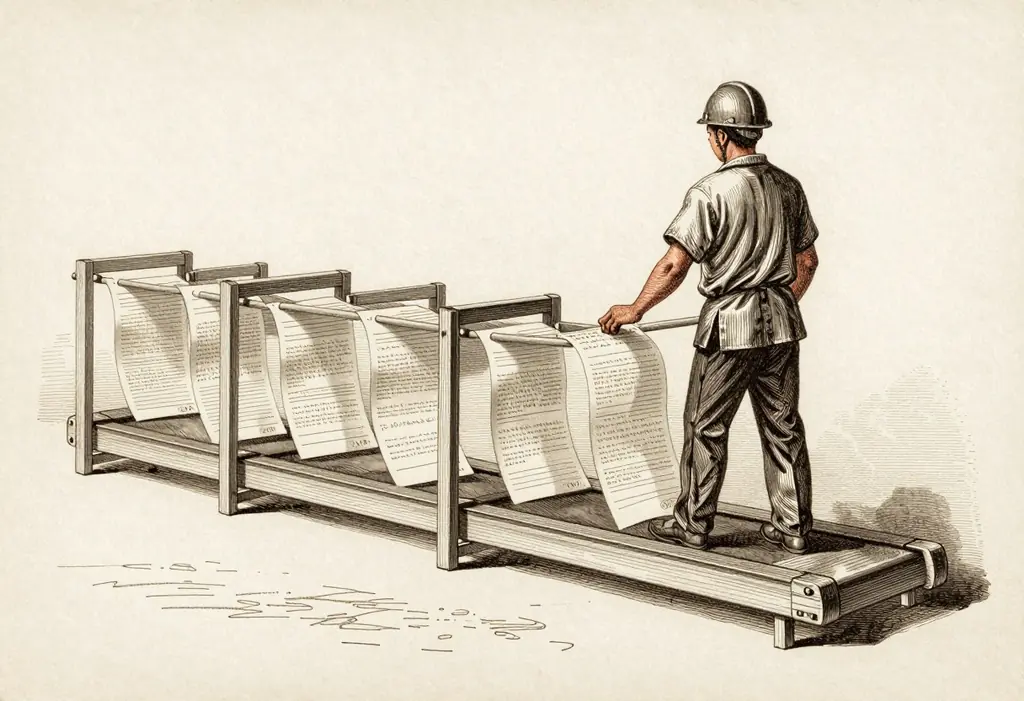
My contract keeps getting renewed every five months. Am I already a regular employee?
Quite possibly. Regular status under Article 295 depends on what you actually do — if the work is necessary or desirable to the employer's usual business, you are regular no matter what the contract is titled or how many times it was cut short, unless the arrangement is genuine project, seasonal or fixed-term employment. And a contractor that supplies you without substantial capital or real control makes the principal your employer by law.
Not lawyer-reviewedRead the answer
I went AWOL. Can my employer just consider me resigned and keep my last pay?
No on both counts. Absence alone is not abandonment, because the employer must also prove a clear intention on your part to sever the relationship, and it must still run the two-notice process before dismissing you. Your earned wages and pro-rated benefits are yours regardless, though days you did not work are unpaid.
Not lawyer-reviewedRead the answer
My employer is making my job impossible so I will quit. Is that constructive dismissal?
Yes — if a reasonable person in your position would feel compelled to give up the job, the law treats it as a dismissal even though you were the one who walked. The usual signs are a demotion, a cut in pay or benefits, an unexplained transfer, or treatment so hostile that staying is unbearable. You have to show the facts first, but once you show a demotion, pay cut or transfer, the burden shifts to the employer to prove the change was legitimate.
Not lawyer-reviewedRead the answer
What is the correct overtime rate, and can my company make me waive it?
Work beyond eight hours on an ordinary day is paid at your hourly rate plus 25%; on a rest day, special day or holiday it is the hourly rate applicable to that day plus 30%. An agreement to waive overtime pay is void, and undertime on one day can never be offset against overtime on another.
Not lawyer-reviewedRead the answer