General information, not legal advice. This answer was written by the PhilippineLaws team from the law it cites and checked for accuracy to the best of our knowledge, last on Sep 29, 2026. It has not been reviewed by a lawyer. Read the cited law yourself, and for your own situation talk to a lawyer or the Public Attorney’s Office (PAO).
What can I do if a coworker or manager makes vulgar remarks or catcalls me at work?
Under the Safe Spaces Act (Republic Act No. 11313), gender-based sexual harassment in the workplace is strictly illegal whether committed by a boss, peer, client, or subordinate. Employers are legally mandated to maintain an active Committee on Decorum and Investigation (CODI) and resolve complaints within 10 days, or face direct administrative fines.
Illustrated Legal Brief
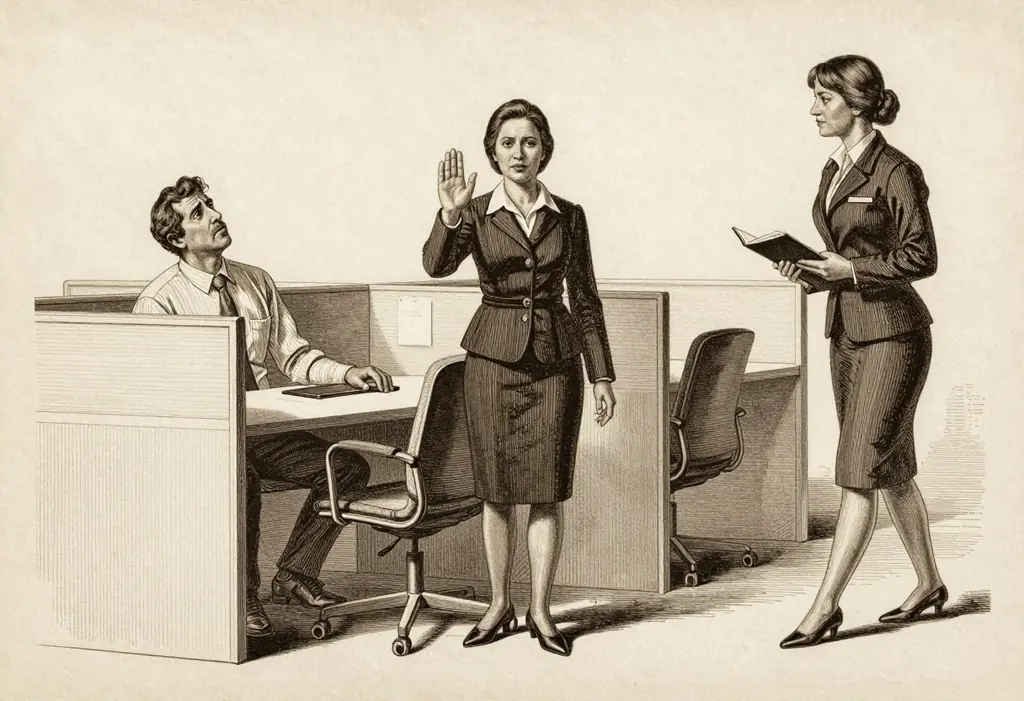 Full Plate
Submit written complaint to CODI
CODI acknowledges receipt and serves notice to the respondent within 48 hours
Allowed: Interim protective measures
Employer may reassign or grant paid leave to prevent ongoing contact during inquiry
Allowed: CODI investigation & decision (10 days)
Mandatory statutory deadline to conclude investigation and recommend sanctions
Caution: DOLE complaint & prosecutor filing
Employer fined by DOLE if inaction occurs; offender faces criminal prosecution
Under RA 11313 Sec. 17, employers face direct DOLE administrative fines if they fail to investigate complaints within 10 days.
Why
Republic Act No. 11313, otherwise known as the Safe Spaces Act (or 'Bawal Bastos Law'), revolutionized Philippine workplace harassment law by expanding protections far beyond the old Anti-Sexual Harassment Act of 1995 (RA 7877). Under the old law, harassment required proof of 'authority, influence, or moral ascendancy' (such as a supervisor to a subordinate). Under the Safe Spaces Act, gender-based sexual harassment can now be committed between peers, by subordinates against superiors, or by third parties like clients, suppliers, and contractors.
Prohibited acts in the workplace include: (1) unwanted sexual advances, requests, or demands for sexual favors; (2) offensive remarks about appearance, body parts, or sexual orientation; (3) green jokes, vulgar comments, or innuendo in person or through company group chats, Slack, or email; (4) non-consensual physical contact, touching, or hugging; and (5) creating an intimidating, hostile, or offensive working environment.
Section 17 of RA 11313 places strict mandatory duties on employers. Every employer in the private and public sector must: adopt an anti-sexual harassment policy; create an independent Committee on Decorum and Investigation (CODI) with equal representation from management and rank-and-file employees, headed by a woman; and investigate and decide all complaints within ten (10) calendar days from receipt.
An employer who fails to establish a CODI, fails to act on a filed harassment complaint within the statutory 10-day period, or retaliates against a complaining employee faces direct administrative penalties from the Department of Labor and Employment (DOLE) ranging from ₱5,000 to ₱15,000, without prejudice to civil damages and criminal prosecution of the offending individual.
If the hostile work environment becomes so intolerable that the employee feels compelled to resign, the employee can also file a case for constructive dismissal before the National Labor Relations Commission (NLRC), demanding full backwages, separation pay, and moral damages.
People also read
I went AWOL. Can my employer just consider me resigned and keep my last pay?
No on both counts. Absence alone is not abandonment, because the employer must also prove a clear intention on your part to sever the relationship, and it must still run the two-notice process before dismissing you. Your earned wages and pro-rated benefits are yours regardless, though days you did not work are unpaid.
Not lawyer-reviewedRead the answer
My contract keeps getting renewed every five months. Am I already a regular employee?
Quite possibly. Regular status under Article 295 depends on what you actually do — if the work is necessary or desirable to the employer's usual business, you are regular no matter what the contract is titled or how many times it was cut short, unless the arrangement is genuine project, seasonal or fixed-term employment. And a contractor that supplies you without substantial capital or real control makes the principal your employer by law.
Not lawyer-reviewedRead the answer
Can I resign immediately, or do I really have to render 30 days?
The default is 30 days' written notice, but the Labor Code lets you walk out the same day in four situations — serious insult, inhuman treatment, a crime committed against you or your family, and causes analogous to those. Outside those, your employer can waive the notice or hold you liable for damages it can actually prove, but it cannot refuse to let you go.
Not lawyer-reviewedRead the answer
My employer is making my job impossible so I will quit. Is that constructive dismissal?
Yes — if a reasonable person in your position would feel compelled to give up the job, the law treats it as a dismissal even though you were the one who walked. The usual signs are a demotion, a cut in pay or benefits, an unexplained transfer, or treatment so hostile that staying is unbearable. You have to show the facts first, but once you show a demotion, pay cut or transfer, the burden shifts to the employer to prove the change was legitimate.
Not lawyer-reviewedRead the answer