General information, not legal advice. This answer was written by the PhilippineLaws team from the law it cites and checked for accuracy to the best of our knowledge, last on Sep 25, 2026. It has not been reviewed by a lawyer. Read the cited law yourself, and for your own situation talk to a lawyer or the Public Attorney’s Office (PAO).
How long can a BPO, security agency, or contractor keep me on 'floating status', and am I entitled to separation pay after 6 months?
The maximum legal limit for floating status (temporary lay-off) is six months. Under Article 301 of the Labor Code, if an employer fails to recall you to a substantive, equivalent post within six months, you are considered constructively dismissed by operation of law and entitled to full separation pay.
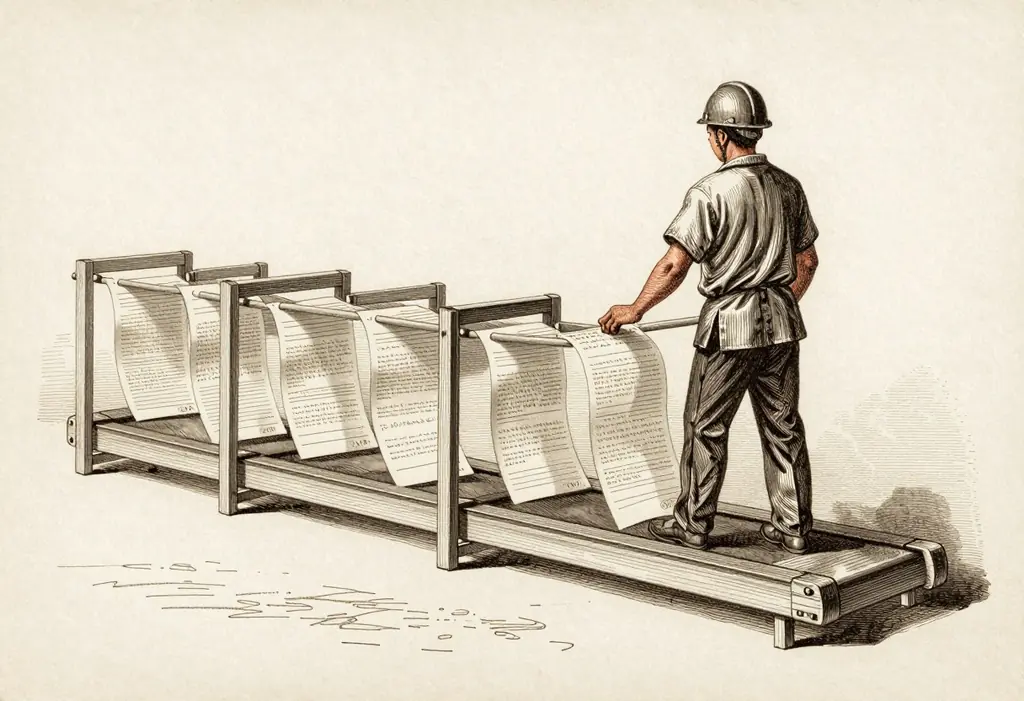
Illustrated Legal Brief
 Full Plate
- Day 0
Notice of Floating Status
Employer issues written notice of temporary lay-off due to client account loss.
- Months 1–5
Bench / Waiting Period
Employment relationship is suspended; employer attempts re-profiling.
- Month 6
Statutory Deadline (Art. 301)
Employer must either reinstate to equivalent post or pay separation pay.
- Day 181+
Constructive Dismissal
Failure to recall turns lay-off into constructive dismissal with full legal remedies.
Why
Under Article 301 (formerly Art. 286) of the Labor Code, the bona-fide suspension of the operation of a business or undertaking for a period not exceeding six months, or the fulfillment by the employee of a military or civic duty, does not terminate employment. In such cases, the employer must reinstate the employee to their former position without loss of seniority rights if they indicate their desire to resume work within one month from resumption of operations.
Commonly applied to call center agents on unassigned bench status, security guards 'off-detail', or factory workers on temporary shutdown, this temporary suspension cannot exceed six calendar months. During this period, the employee receives no salary because the principle of 'no work, no pay' applies.
If the six-month period lapses without the employee being recalled to an equivalent position, or without being deployed to a new client account under substantially equal terms and pay, the employer's inaction amounts to constructive dismissal (*PT&T v. NLRC*; *Mobile Protective & Det. Agency v. Ompad*).
Upon the expiration of the six months, the employer faces two choices: either recall the employee to active work, or pay them statutory separation pay under Article 298 (at least one-half month pay per year of service, or one whole month, depending on the ground). An employer cannot avoid liability by offering an assignment hundreds of kilometers away or demoting the worker.
People also read
My contract keeps getting renewed every five months. Am I already a regular employee?
Quite possibly. Regular status under Article 295 depends on what you actually do — if the work is necessary or desirable to the employer's usual business, you are regular no matter what the contract is titled or how many times it was cut short, unless the arrangement is genuine project, seasonal or fixed-term employment. And a contractor that supplies you without substantial capital or real control makes the principal your employer by law.
Not lawyer-reviewedRead the answer
I went AWOL. Can my employer just consider me resigned and keep my last pay?
No on both counts. Absence alone is not abandonment, because the employer must also prove a clear intention on your part to sever the relationship, and it must still run the two-notice process before dismissing you. Your earned wages and pro-rated benefits are yours regardless, though days you did not work are unpaid.
Not lawyer-reviewedRead the answer
My employer is making my job impossible so I will quit. Is that constructive dismissal?
Yes — if a reasonable person in your position would feel compelled to give up the job, the law treats it as a dismissal even though you were the one who walked. The usual signs are a demotion, a cut in pay or benefits, an unexplained transfer, or treatment so hostile that staying is unbearable. You have to show the facts first, but once you show a demotion, pay cut or transfer, the burden shifts to the employer to prove the change was legitimate.
Not lawyer-reviewedRead the answer
What is the correct overtime rate, and can my company make me waive it?
Work beyond eight hours on an ordinary day is paid at your hourly rate plus 25%; on a rest day, special day or holiday it is the hourly rate applicable to that day plus 30%. An agreement to waive overtime pay is void, and undertime on one day can never be offset against overtime on another.
Not lawyer-reviewedRead the answer